Showing posts with label The Cold War in Asia. Show all posts

Sunday, September 6, 2020

Special Frontier Force-Establishment No.22-Vikas Regiment thwarts the Chinese incursion in Ladakh, Kashmir, India

Special Frontier Force-Establishment No. 22-Vikas Regiment thwarts Chinese incursion in Ladakh, Kashmir, India

India thwarts another Chinese incursion in Ladakh

DECCAN CHRONICLE | PAWAN BALI Published Sep 1, 2020.  

Pre-emptive move by Indian Army to secure another LAC position signals its intent to dig in for the winter.

Special Frontier Force thwarts Chinese incursion in Ladakh, Kashmir, India

The Pangong Tso lake in Ladakh on the banks of which India and China have been engaged in a standoff for four months. India claimed on Monday that it pre-empted a move by the Chinese army to occupy Indian territory at a new point in the region. (AP file photo)

New Delhi: The Indian army said on Monday that it "pre-empted" an attempt by Chinese troops to transgress and grab land on the southern banks of Pangong Tso on the intervening night of 29-30 August 2020.

This was an attempt by the Chinese to open a new front in the Ladakh sector. India and China were until now in a standoff  in the "Finger area" on the northern banks of the Pangong Tso. But now they are also looking to infiltrate in the Chushul sector.

In a statement issued on Monday, the Indian Army said PLA troops carried out provocative military movements to change the status quo on the night of 29-30 August 2020. “Indian troops pre-empted this PLA activity on the Southern Bank of Pangong Tso Lake, undertook measures to strengthen our positions and thwart Chinese intentions to unilaterally change facts on the ground,” it said.

The statement added that the Indian Army is committed to maintaining peace and tranquility through dialogue, but is also equally determined to protect India's territorial integrity.

A brigade commander level flag meeting was held at Chushul to resolve the issue.

As per initial reports, the Army had received information that the Chinese started building up forces to occupy Indian territory on the southern banks of Pangong Tso. The Indian Army physically occupied the area as soon as the PLA tried its transgression. There was no physical clash between the troops.

The Indian Army's “pre-emptive” move comes days after the Chief of Defense staff (CDS) Gen. Bipin Rawat warned that India has "military options" to deal with Chinese transgression in Ladakh if talks between the countries at the military and diplomatic level don't yield any result.

The Chinese army’s Western Theater Command accused India of crossing the Line of Actual Control and deliberately launching provocations. “China strongly opposes the acts and urges India to immediately withdraw the troops that have illegally crossed the LAC,” it said.

It said that Chinese troops are taking necessary measures in response to Indian troops provocations and will closely follow the situation and resolutely safeguard national sovereignty, peace and stability at the border area.

The military standoff between India and China in Ladakh will complete four months this week. The two armies are involved in a standoff in Pangong Tso, Hot Springs area and Despang-DBO sector in Ladakh.

A series of military and diplomatic talks between India and China have failed to persuade China to disengage. Instead China has used this time of negotiations with India to bring in more forces at the LAC, position heavy weaponry, construct helipads, build air defense systems, and deploy missiles at new positions.

It has even deployed its most advanced fighter jets J-20 at Hotan airbase which is 200 miles from Ladakh and they are carrying out sorties directly threatening India. China is also reportedly laying down optic fiber at LAC to further consolidate its transgressions.    

In the Northern Bank of Pangong Tso, China has illegally occupied 8 km of Indian territory between finger 4 and 8. Despite a series of diplomatic and military dialogues China has refused to vacate the area between finger 5 and 8 which it had illegally occupied in May 2020. China has built up bunkers, gun positions and brought heavy artillery in the finger area.     

The Chinese attempt to occupy new areas comes despite a series of engagements at the diplomatic and military level to disengage and deescalate the situation in the Ladakh sector.  The latest confrontation means that the situation is unlikely to deescalate any time soon and will continue in the winter too. India has already started preparations for winter and is stocking up supplies required for thousands of new troops deployed in the area.  

Special Frontier Force thwarts Chinese incursion in Ladakh, Kashmir, India. The 1962 India-China War Memorial at Chushul, Ladakh.

Special Frontier Force personnel were used  by Indian Army to occupy these strategic peaks in the Southern banks of Pangong Tso. This took the Chinese army by surprise. The occupation of these heights has shown Indian resolve to take the fight to the Chinese side. 

Chushul, Ladakh, the 1962 India-China War Memorial.


Wednesday, June 17, 2020

The Seventy Year Misery of Military Occupation of Tibet Must End Now

The United States Must Evict the Military Occupier of Tibet-The Unfinished Korea-Vietnam War The United States Must Evict the Military Occupier of Tibet-The Unfinished Korea-Vietnam War. In my analysis, ‘The Cold War in Asia’ represents the dangers of the spread of Communism to the mainland China. The United States armed intervention in the Korean Peninsula did not prevent the Communist takeover of Tibet in 1950. The United States must recognize the real Enemy and must evict the Military Occupier of Tibet to secure Peace, Freedom, Democracy, and Justice in South Asia. Rudra Narasimham Rebbapragada Special Frontier Force-Establishment No. 22-Vikas Regiment The United States Must Evict the Military Occupier of Tibet. Special Frontier Force VS The Evil Red Empire-Red China . India-China clash: Diplomats ‘strongly protest’ over border clashes BBC June 17, 2020, 2:52 PM UTC The two nations have an agreement that says no guns should be taken within two kilometres of the border The United States Must Evict the Military Occupier of Tibet. India and China have an agreement that says no guns should be taken within two kilometres of the border. The Indian and Chinese foreign ministers have exchanged protests over clashes in a disputed Himalayan border area which led to the deaths of at least 20 Indian troops. India’s Subrahmanyam Jaishankar said China tried to erect a structure inside Indian territory, while China’s Wang Yi said Indian troops attacked first. But in a phone call both men promised not to escalate the situation. It was the first deadly clash at the disputed border for at least 45 years. Soldiers reportedly brawled with sticks and bats but no shots were fired. China has not released casualty figures. Unconfirmed reports in Indian media say at least 40 Chinese soldiers died. Some Indian soldiers are still believed to be missing. Earlier Indian Prime Minister Narendra Modi said the Indian deaths “will not be in vain” and that India would be “proud that our soldiers died fighting the Chinese” in the clash in the Ladakh region on Monday. Addressing the confrontation for the first time in a televised address on Wednesday, he said: “India wants peace but when provoked, India is capable of giving a fitting reply, be it any kind of situation.” What did the two diplomats say? An Indian government statement following the phone conversation said that Chinese troops had tried to put up a structure on the Indian side of the de facto border, the Line of Actual Control (LAC), in the strategically important Galwan Valley. It described this as “premeditated and planned action that was directly responsible for the resulting violence and casualties” and urged China to “take corrective steps”. Google Maps view of Galwan Valley The United States Must Evict the Military Occupier of Tibet. Google Maps view of Galwan Valley The statement concluded that neither side would take action to escalate matters. Meanwhile a Chinese statement quoted Mr Wang as saying: “China again expresses strong protest to India and demands the Indian side launches a thorough investigation… and stop all provocative actions to ensure the same things do not happen again.” “Both sides should resolve the dispute through dialogue, and keep the border safe and tranquil,” he added. What happened? The fighting occurred in the precipitous, rocky terrain of the Galwan Valley. Indian media say soldiers engaged in direct hand-to-hand combat, with some “beaten to death”. During the fight, one newspaper reported, others fell or were pushed into a river. A satellite image of Galwan Valley shows the rocky and barren terrain The United States Must Evict the Military Occupier of Tibet. A satellite image of Galwan Valley shows the rocky and barren terrain. The Indian army initially said a colonel and two soldiers had died. It later said that “17 Indian troops who were critically injured in the line of duty” had died from their injuries, taking the “total that were killed in action to 20”. “I understand that some [further] Indian soldiers went missing. The Indian side is still working to release them from Chinese custody,” defence analyst Ajai Shukla told the BBC. Indian forces appear to have been massively outnumbered by Chinese troops. A senior Indian military official told the BBC there were 55 Indians versus 300 Chinese, who he described as “the Death Squad”. “They hit our boys on the head with metal batons wrapped in barbed wire. Our boys fought with bare hands,” the officer, who did not want to be named, said. The clash has provoked protests in India, with people burning Chinese flags. China has not confirmed how many of its personnel died or were injured. The BBC’s Robin Brant in Beijing says that China has never given contemporaneous confirmation on military deaths outside of peacekeeping duties. Our correspondent adds that on this occasion China’s propagandists may not want to fan nationalist flames at home by making much of any loss, or admit to a significant and demoralizing loss. This is not the first time the two nuclear-armed neighbors have fought without conventional firearms on the border. India and China have a history of face-offs and overlapping territorial claims along the more than 3,440km (2,100 mile), poorly drawn LAC separating the two sides. India shows restraint Analysis by Geeta Pandey, BBC News, Delhi The first comments from the Indian government on the violent standoff on the Chinese border came nearly 24 hours after the news broke on Tuesday. And Prime Minister Narendra Modi and his cabinet colleagues – the defence minister and the home minister – have chosen their words carefully. Usually boastful and given to grandstanding, Mr Modi and his ministers have displayed utmost restraint in their public messages this time, mostly sticking to mourning the loss of soldiers. The prime minister did say: “India wants peace but, if instigated, it is capable of giving a befitting reply.” But this is seen as aimed more at his political rivals and supporters domestically, rather than as a warning to Beijing. How tense is the area? The LAC is poorly demarcated. The presence of rivers, lakes and snowcaps means the line can shift. The soldiers either side – representing two of the world’s largest armies – come face-to-face at many points. Border patrols have often bumped into each other, resulting in occasional scuffles. The last firing on the border happened in 1975 when four Indian soldiers were killed in a remote pass in the north-eastern state of Arunachal Pradesh. The clash was variously described by former diplomats as an ambush and an accident. But no bullets have been fired since. At the root of this is a 1996 bilateral agreement that says “neither side shall open fire… conduct blast operations or hunt with guns or explosives within two kilometres of the Line of Actual Control”. Kashmir map The United States Must Evict the Military Occupier of Tibet. Kashmir map But there have been tense confrontations along the border in recent weeks. In May Indian and Chinese soldiers exchanged physical blows on the border at Pangong Lake, also in Ladakh, and in the north-eastern Indian state of Sikkim hundreds of miles to the east. India has accused China of sending thousands of troops into Ladakh’s Galwan Valley and says China occupies 38,000 sq km (14,700 sq miles) of its territory. Several rounds of talks in the last three decades have failed to resolve the boundary disputes. There are several reasons why tensions are rising again now – but competing strategic goals lie at the root. The two countries have devoted extensive money and manpower to building roads, bridges, rail links and air fields along the disputed border. Both India and China see each other’s construction efforts as calculated moves to gain a tactical advantage, and tensions often flare up when either announces a major project. SPECIAL FRONTIER FORCE VS THE EVIL RED EMPIRE : FOR SEVENTY YEARS, TIBETANS HAVE LIVED UNDER MILITARY OCCUPATION . WHAT IS TIBET’S FUTURE? HOW TO EVICT THE EVIL RED EMPIRE FROM TIBET ?

Friday, May 29, 2020

The Weak US Policy allowed China to grab territory in Kashmir

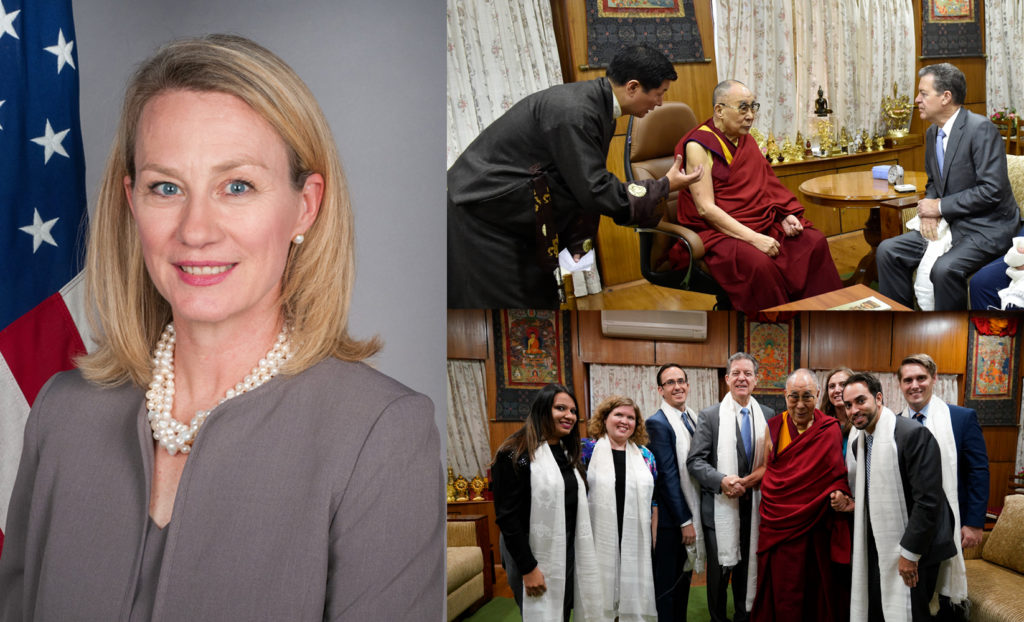
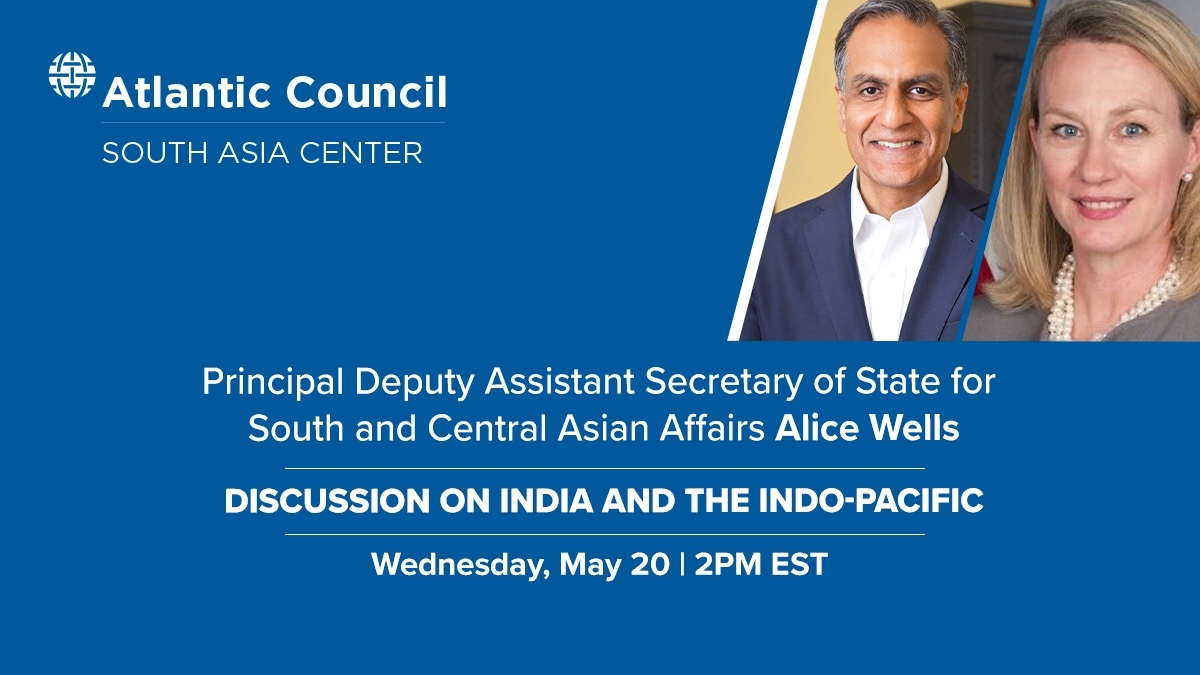
SPECIAL FRONTIER FORCE DEMANDS THE UNITED STATES TO RECOGNIZE THE MCMAHON LINE IN KASHMIR In my analysis, the United States will not be able to support the military mission of Special Frontier Force without recognizing the McMahon Line in Kashmir. On behalf of Special Frontier Force I demand the United States to duly recognize the McMahon Line in Kashmir apart from recognizing it in Arunachal Pradesh to contain China’s military expansionism in Southeast Asia. In the past, China grabbed the Aksai Chin area of Kashmir taking the full advantage of the weakness of the US Policy in Southeast Asia. Rudra Narasimham Rebbapragada Special Frontier Force-Establishment No. 22-Vikas Regiment Principal Deputy Assistant Secretary for South and Central Asian Affairs Alice Wells: Discussion on India and the Indo-Pacific REMARKS THE ATLANTIC COUNCIL WASHINGTON, DC Mr. Kempe: Hello, everyone. I’m Fred Kempe. I’m President and CEO of the Atlantic Council and I’m delighted to have you in this virtual room with two of my favorite people, and I’ll get to that in a second, but there are not two more people more knowledgeable in their fields or more accomplished in their work as diplomats. We talk a lot about social distance. We like to call it Atlantic Council geographic distance because we feel through these meetings we can bring all of you closer together socially and intellectually. As a reminder, today’s meeting, which is a discussion on India and the Indo-Pacific, is public and on the record. We are fortunate today to be joined by Ambassador Alice Wells, Principal Deputy Assistant Secretary of State for South and Central Asian Affairs. We’re especially grateful to host Ambassador Wells today. She will be retiring after an enormously distinguished 31 year career serving as a diplomat with the U.S. Department of State this Saturday. Ambassador Wells assumed her duties as Acting Assistant Secretary for South and Central Asia in June 2017. I’m delighted to say that the Atlantic Council has had the good fortune of working with her and hosting her several times during this tenure. Prior to her current post, Ambassador Wells served as the U.S. Ambassador to the Kingdom of Jordan, one of the most important positions in that region; a Senior Advisor in the Near Eastern Affairs Bureau in Department of State; Special Assistant to the President for Russia and Central Asia; and much more. During her time in the Foreign Service she served in U.S. embassies in New Delhi, Islamabad, in Riyadh. In short, she knows the world and she knows her stuff. Alice, please allow me once again to thank you for your distinguished service. We’re also joined by Ambassador Richard Verma, Vice Chair and Partner to the Asia Group and former U.S. Ambassador to India from 2014 to 2017. Ambassador Verma has a distinguished career also over the past 25 years, serving across the U.S. government as Assistant Secretary of State for Legislative Affairs, Senior National Security Advisor to the Senate Majority Leader, and as Judge Advocate in the U.S. Air Force. Our two participants, as I said earlier, are two of the most knowledgeable and accomplished individuals working on India and the Indo-Pacific. I look forward, as we all do on this virtual call, to your conversation. So Alice, Rich, it’s a pleasure to know you and it’s going to be a great pleasure to listen to you. I think Alice, you’re going to kick us off, Ambassador Wells will kick us off with some opening remarks, and then we’ll ask Rich to moderate the event. Ambassador Verma: Let me turn to another frankly tense issue which is the border standoff. As you noted, Indian and Chinese forces often coming into contact with each other perhaps more frequently, even in the last week or so additional security challenges on that front. How much does that worry you? Can you give us a sense, are there de-escalatory measures that can be taken? This 2200 mile contested border presents some real security challenges for the Indian side. Ambassador Wells: I think for anyone who was under any illusions that Chinese aggression was only rhetorical, I think they need to speak to India where India on a weekly, monthly, but certainly a very regular basis has to experience the pinpricks of Chinese military. It’s a reminder of what’s at stake in building a world order and sustaining a world order that respects sovereignty, territorial integrity, as well as respects the rules of international trade that have allowed, again, so many hundreds of millions to be lifted out of poverty. We in the United States recognize the McMahon Line. We’ve always recognized Arunachal Pradesh as an Indian state. We certainly urge India and China on the Line of Actual Control to engage diplomatically to resolve any outstanding differences. But this is, if you look to the South China Sea, there’s a method here to Chinese operations and it is that constant aggression, the constant attempt to shift the norms, to shift what is the status quo, that has to be resisted whether it’s in the South China Sea where we’ve done a group sail with India or whether it’s in India’s own backyard, both on land as well as in the Indian Ocean.

Friday, May 8, 2020

IF TIBETANS WANT PEACE, TIBETANS MUST PREPARE FOR WAR. THE LEGACY OF WORLD WAR II HUMP FLIGHTS

My Musings on May 08, 1945, Victory in Europe, V-E Day. No Peace without preparing for War. The Legacy of World War II Hump Flights. My Musings on May 08, 1945, Victory in Europe, V-E Day. No Peace without preparing for War. The Legacy of World War II Hump Flights. On May 08, 2020, 75-Years after the Victory in Europe, I want to claim that there will be no Peace without preparing for War. I am specifically speaking about Peace, Freedom, and Justice for the Tibetan people. During the concluding phase of World War II, after the celebration of Victory in Europe, Tibet received a golden opportunity to prepare for War to prevent the Chinese Aggression of 1950. I ask my readers to learn about the Hump Flights which essentially describe the beginning of ‘The Cold War’ in Asia. Apart from defeating the Japanese aggression in China, the US was deeply concerned about the spread of Communism to mainland China. At the same time, Tibet was concerned about its own security. Tibetans were concerned about the military power of both the Nationalists and the Communists who were fighting to gain control over the mainland China. The US delivered arms and ammunition to Tibet using the Hump Flights. That military assistance was inadequate and insufficient to meet the security challenge to Peace and Freedom in Tibet. Between 1945 and 1950, Tibet missed this golden opportunity to prepare for War that would have prevented the Chinese military conquest in October 1950. Rudra Narasimham Rebbapragada Special Frontier Force-Establishment No. 22-Vikas Regiment 6 brutal facts about ‘flying the hump’ — the deadly World War II air route over the unforgiving Himalayas Blake Stilwell, We Are The Mighty Jun 15, 2018, 11:43 AM My Musings on May 08, 1945, Victory in Europe, V-E Day. No Peace without preparing for War. The Legacy of World War II Hump Flights. “The Hump” was the nickname Allied pilots gave the airlift operation that crossed the Himalayan foothills into China. It was the Army Air Force’s most dangerous airlift route, but it was the only way to supply Chinese forces fighting Japan — and things weren’t going well for China. World War II began in 1937 for Chiang Ki-Shek’s nationalist China. By the time the United States began running supplies to the Chinese forces fighting Japan, the Western part of the country was firmly controlled by the invading Japanese. The Japanese also controlled Burma, on India’s Eastern border, cutting off the last land route to the Chinese. Aid would have to come by air and American planes would have to come from the West — over the “Roof of the World.” But getting there was terribly inefficient. As a matter of fact, the original plan to bomb targets on the Japanese mainland involved flying B-29s loaded with fuel over the Hump from India into China. But when the planes landed at Chengdu, they would often have to take on fuel to ensure they could make the flight home, as recounted by then-Army Air Forces officer and later Secretary of Defense Robert McNamara in the film The Fog of War. Beyond the inefficiency of flying the Hump, it was incredibly dangerous. More than 1,000 men and 600 planes were lost over the 530-mile stretch of rugged terrain, and that’s a very conservative estimate. It was dubbed the “Skyway to Hell” and the “Aluminum Trail” for the number of planes that didn’t make it. 1. Flying the Hump was central to winning the war. My Musings on May 08, 1945, Victory in Europe, V-E Day. No Peace without preparing for War. The Legacy of World War II Hump Flights. The Curtis C-46 Commando in flight. When reading about World War II’s Pacific Theater, what comes up most often is the gallantry and bravery of Marines, sailors, and coasties who were part of the island-hopping campaign. We also hear a lot about the bomber groups of airmen who devastated the Japanese home islands. What we seldom hear about is the US Army in the China, India, Burma theater who were busy building a 1,000-mile road and flying over the Himalayan foothills to keep China in the fight. And this was vitally important. China is a vast country, and when the Communists and nationalists joined forces to take on the Japanese, they were a massive force to take on. Three million Chinese soldiers kept 1.25 million Japanese troops in China, away from the ever-creeping Allies who were taking island after island, slowly getting closer to the Japanese mainland. 2. Extreme weather took down more US pilots than the Japanese. My Musings on May 08, 1945, Victory in Europe, V-E Day. No Peace without preparing for War. The Legacy of World War II Hump Flights.The extent of Japanese control, red, in 1940. Forget, for a moment, that American pilots were flying planes dubbed “The Flying Coffin” — the Curtis C-46 Commando — at times. The mountain ranges of the Himalayas caused jetstream-strength winds and dangerous weather at extreme altitudes. And when that doesn’t take you, a Japanese Zero will be there to try. Pilots would plod along at ground speeds of around 30 miles per hour while the wind lifted their planes to 28,000 feet and then back to 6,000 shortly after. If pilots weren’t fighting ice storms or thunderstorms, they were fighting the Japanese. 3. Many pilots flying the Hump were newbies. My Musings on May 08, 1945, Victory in Europe, V-E Day. No Peace without preparing for War. The Legacy of World War II Hump Flights. A C-46 transport plane of the Air Transport Command in the China India Burma Theater about to be loaded for important flight across “The Hump” to China, May 29, 1944. (AP Photo) Although the China National Aviation Corporation ran the route before the war and its pilots continued to run cargo over the Hump, the Army’s pilots were newly-trained flying officers with little experience flying in anything, let alone extreme weather. Even General Henry “Hap” Arnold — the only General of the Air Force ever bestowed such a title — got lost due to lack of oxygen flying the Hump. This may have added to the fatality rate on the route — a full one-third of the men flying it died there. 4. If the weather didn’t get them, the terrain might. My Musings on May 08, 1945, Victory in Europe, V-E Day. No Peace without preparing for War. The Legacy of World War II Hump Flights. Allied transportation lines in Burma and China’s Yunnan Province during World War II. 5. Inside the plane wasn’t great either. My Musings on May 08, 1945, Victory in Europe, V-E Day. No Peace without preparing for War. The Legacy of World War II Hump Flights. Winging along over the 500-mile India-China air route that replaced the old Burma road, this plane from the Indian-China wing of the Air Transport Command returns to India from a trip into China on January 19, 1944. These ships, which fly the hazardous run alone, carry into China all supplies for the US 14th Air Force. AP Photo Pilots were issued fleece-lined jackets, boots, and gloves to keep their extremities from freezing during the flight. Lack of oxygen could cause pilots to veer off-course and into an almost certain death. C-46 cargo planes did not glide, their heavy engines causing an almost immediate dive. Once out of fuel, crews would have to bail out with minimal protection, cold weather gear, and nine rounds of a .45-caliber pistol. 6. That last bullet is for you. My Musings on May 08, 1945, Victory in Europe, V-E Day. No Peace without preparing for War. The Legacy of World War II Hump Flights.The India-China division of the Air Transport Command celebrated Air Force Day on August 1, 1945 by sending over the “Hump” the most cargo ever carried in a day in regularly scheduled air operations — more than 5,327 tons of military equipment for use in China. (AP Photo) Whether crashing or bailing out into the freezing cold or jumping into enemy-held territory, there would be no search and rescue mission coming for crews flying the Hump. A rescue crew would be subject to the same extreme cold weather and fuel issues as any other plane. In enemy territory, Japanese patrols would capture American pilots, torture them, then kill them. Part of the training regimen for Hump pilots included the right way to use the last bullet on oneself. My Musings on May 08, 1945, Victory in Europe, V-E Day. No Peace without preparing for War. The Legacy of World War II Hump Flights.

Wednesday, February 13, 2019

FEBRUARY 13, 1913. ON THIS DAY TIBET DECLARED FULL INDEPENDENCE

FEBRUARY 13, 1913. ON THIS DAY TIBET DECLARED FULL INDEPENDENCE
February 13, 1913. On This Day Tibet Declared Full Independence.
I ask historians to record Tibet’s Proclamation of Independence as the most significant event of recent human history.
Rudranarasimham Rebbapragada
SPECIAL FRONTIER FORCE
February 13, 1913. On This Day Tibet Declared Full Independence.
Proclamation of Independence of Tibet(1913) 
by Thubten Gyatso
February 13, 1913. On This Day Tibet Declared Full Independence.
Proclamation of Independence Issued by the 13th Dalai Lama (1913)
PROCLAMATION ISSUED BY H.H. THE DALAI LAMA XIII, ON THE EIGHTH DAY OF THE FIRST MONTH OF THE WATER-OX YEAR (February 14th, 1913)
Translation of the Tibetan Text
I, the Dalai Lama, most omniscient possessor of the Buddhist faith, whose title was conferred by the Lord Buddha’s command from the glorious land of India, speak to you as follows:
I am speaking to all classes of Tibetan people. Lord Buddha, from the glorious country of India, prophesied that the reincarnations of Avalokitesvara, through successive rulers from the early religious kings to the present day, would look after the welfare of Tibet.
During the time of Genghis Khan and Altan Khan of the Mongols, the Ming dynasty of the Chinese, and the Ch’ing Dynasty of the Manchus, Tibet and China cooperated on the basis of benefactor and priest relationship. A few years ago, the Chinese authorities in Szechuan and Yunnan endeavored to colonize our territory. They brought large numbers of troops into central Tibet on the pretext of policing the trade marts. I, therefore, left Lhasa with my ministers for the Indo-Tibetan border, hoping to clarify to the Manchu emperor by wire that the existing relationship between Tibet and China had been that of patron and priest and had not been based on the subordination of one to the other. There was no other choice for me but to cross the border, because Chinese troops were following with the intention of taking me alive or dead.
On my arrival in India, I dispatched several telegrams to the Emperor; but his reply to my demands was delayed by corrupt officials at Peking. Meanwhile, the Manchu empire collapsed. The Tibetans were encouraged to expel the Chinese from central Tibet. I, too, returned safely to my rightful and sacred country, and I am now in the course of driving out the remnants of Chinese troops from DoKham in Eastern Tibet. Now, the Chinese intention of colonizing Tibet under the patron-priest relationship has faded like a rainbow in the sky. Having once again achieved for ourselves a period of happiness and peace, I have now allotted to all of you the following duties to be carried out without negligence:
1. Peace and happiness in this world can only be maintained by preserving the faith of Buddhism. It is, therefore, essential to preserve all Buddhist institutions in Tibet, such as the Jokhang temple and Ramoche in Lhasa, Samye, and Traduk in southern Tibet, and the three great monasteries, etc.
2. The various Buddhist sects in Tibet should be kept in a distinct and pure form. Buddhism should be taught, learned, and meditated upon properly. Except for special persons, the administrators of monasteries are forbidden to trade, loan money, deal in any kind of livestock, and/or subjugate another’s subjects.
3. The Tibetan government’s civil and military officials, when collecting taxes or dealing with their subject citizens, should carry out their duties with fair and honest judgment so as to benefit the government without hurting the interests of the subject citizens. Some of the central government officials posted at Ngari Korsum in western Tibet, and Do Kham in eastern Tibet, are coercing their subject citizens to purchase commercial goods at high prices and have imposed transportation rights exceeding the limit permitted by the government. Houses, properties, and lands belonging to subject citizens have been confiscated on the pretext of minor breaches of the law. Furthermore, the amputation of citizens’ limbs has been carried out as a form of punishment. Henceforth, such severe punishments are forbidden.
4. Tibet is a country with rich natural resources, but it is not scientifically advanced like other lands. We are a small, religious, and independent nation. To keep up with the rest of the world, we must defend our country. In view of past invasions by foreigners, our people may have to face certain difficulties, which they must disregard. To safeguard and maintain the independence of our country, one and all should voluntarily work hard. Our subject citizens residing near the borders should be alert and keep the government informed by special messenger of any suspicious developments. Our subjects must not create major clashes between the two nations because of minor incidents.
5. Tibet, although thinly populated, is an extensive country. Some local officials and landholders are jealously obstructing other people from developing vacant lands, even though they are not doing so themselves. People with such intentions are enemies of the State and our progress. From now on, no one is allowed to obstruct anyone else from cultivating whatever vacant lands are available. Land taxes will not be collected until three years have passed; after that, the land cultivator will have to pay taxes to the government and to the landlord every year, proportionate to the rent. The land will belong to the cultivator.
Your duties to the government and to the people will have been achieved when you have executed all that I have said here. This letter must be posted and proclaimed in every district of Tibet, and a copy kept in the records of the offices in every district.
From the Potala Palace.
(Seal of the Dalai Lama)
February 13, 1913. On This Day Tibet Declared Full Independence.


Friday, February 8, 2019

SPECIAL FRONTIER FORCE PAYS TRIBUTE TO JOHN DINGELL


"
SPECIAL FRONTIER FORCE PAYS TRIBUTE TO JOHN DINGELL

Special Frontier Force Pays a Respectful Tribute to the US Congress Representative John Dingell.
Special Frontier Force pays a respectful tribute to John Dingell the longest-serving member of the US House of Representatives. I acknowledge his support for the Tibetan Resistance Movement from its inception.

Special Frontier Force Pays a Respectful Tribute to the US Congress Representative John Dingell.

Special Frontier Force Pays a Respectful Tribute to the US Congress Representative John Dingell who served the architects of the Tibetan Resistance Movement.

Special Frontier Force Pays a Respectful Tribute to the US Representative John Dingell.
John Dingell on Foreign Policy
Democratic Representative (MI- 15)
Voted YES on deterring foreign arms transfers to China.
To authorize measures to deter arms transfers by foreign countries to the People's Republic of China, A YES vote would grant the President the ability to place sanctions on any individual or country that violates the arms embargo, including: Denial of participation in cooperative research and development
  • Prohibition of ownership and control of any business registered as a manufacturer or exporter of defense articles or services
  • Removal of all licenses relative to dual-use goods or technology
  • Prohibition of participation of any foreign military sales
  • Reference: East Asia Security Act; Bill HR 3100; vote number 2005-374 on Jul 14, 2005
  • Voted NO on Permanent Normal Trade Relations with China.
  • Vote to give permanent Normal Trade Relations [NTR] status to China. Currently, the NTR status for China is debated and voted on annually. The measure contains provisions designed to protect the United States from Chinese import surges and the administration would have to report annually on China's compliance with the trade agreement. The bill establishes a commission to monitor human rights, labor standards, and religious freedom in China.
  • Reference: Bill sponsored by Archer, R-TX; Bill HR 4444; vote number 2000-228 on May 24, 2000

John Dingell, the longest-serving member of U.S. Congress, dead at 92


Special Frontier Force Pays a Respectful Tribute to the US Congress Representative John Dingell.
© Reuters/Rebecca Cook FILE PHOTO - Rep. John Dingell, D-Mich, acknowledges the audience during a luncheon in Southgate
WASHINGTON, Feb 7 (Reuters) - John Dingell, a gruff Michigan Democrat who entered the U.S. House of Representatives in 1955 to finish his late father's term and became a legislative heavyweight and longest-serving member of Congress, died on Thursday. He was 92.
"Today the great State of Michigan said farewell to one of our greatest leaders. John Dingell will forever be remembered as 'The Dean' of Congress not simply for the length of his service, but for his unparalleled record of legislative accomplishments," Michigan Governor Gretchen Whitmer wrote in a post on Twitter.
Dingell served 59 years in the House before retiring in 2015 because, as he said to a Michigan business group at the time, he could no longer "live up to my own personal standard" for serving in Congress.
On Wednesday, Dingell's wife, Debbie Dingell, who was elected to succeed him, said on Twitter that she skipped Tuesday's State of the Union address in Washington to be with him as his health declined.
The Detroit News reported he was in hospice care after being diagnosed with prostate cancer, which he had decided not to treat.
On Wednesday, Dingell dictated a tweet for his wife to write: "I want to thank you all for your incredibly kind words and prayers. You're not done with me just yet."
Democratic Senator Debbie Stabenow wrote in a post on Twitter: "We have been incredibly lucky to have you and will miss you dearly."
(Reporting by David Shepardson, Eric Beech, and Makini Brice; Writing by Will Dunham; Editing by Bill Trott and Peter Cooney)

Special Frontier Force Pays a Respectful Tribute to the US Congress Representative John Dingell.

"

Sunday, February 3, 2019

THE COLD WAR IN ASIA. THE SPREAD OF COMMUNISM TO TIBET

THE COLD WAR IN ASIA. THE SPREAD OF COMMUNISM TO TIBET
The Cold War in Asia. The Spread of Communism to Tibet.
The Cold War in Asia began in 1949 with the spread of Communism to mainland China. The spread of Communism has not stopped. For Tibetans, there is no hope for "Meaningful Autonomy" if The Communist Party of China rules over their daily lives.
Rudranarasimham Rebbapragada
SPECIAL FRONTIER FORCE
China cracks down on Tibet CPC officials over links with Dalai Lama
The Cold War in Asia. The Spread of Communism to Tibet.
Beijing, February 2
China's ruling Communist Party is cracking down on its officials who are taking part in religious activities violating party's ideology of adhering to atheism and secretly maintaining contacts with Tibetan spiritual leader the Dalai Lama, who has been branded as "separatist" by Beijing.
A video produced by the Tibetan provincial government has revealed cases in the region where local Communist Party of China (CPC) members violated the CPC regulations on religion, anti-separatism and anti-corruption, state-run Global Times reported on Saturday.
So far, three officials have been expelled from the party and 10 others received a warning, the report said.
The Tibetan authority attaches great importance to the party discipline consistent with a nationwide campaign to strengthen the party management. It regulated 46 violations by local CPC members, including religious beliefs, according to the video produced by the publicity department of the regional commission for discipline inspection of Tibet and Tibet television.
The video, part of a four-episode series featuring the region's efforts on anti-corruption and regulating the party members, was aired from January 28 to 31 on Tibet television, the report said.
Buddhism is a widely popular religion in Tibet, which is governed by the CPC ever since China took control of it in 1950. Despite his exile in India since 1959, the Dalai Lama remains the most revered religious figure in the Himalayan region.
The CPC remains an atheist organization. Thus, CPC members are banned from religious beliefs, because they can only believe in Marxism and believing in other religions means betrayal of their chosen belief and it will shake their belief in Marxism and separate them from the party, Xiong Kunxin, an ethnic studies professor at Tibet University in Lhasa, told the Global Times. — PTI
The Cold War in Asia. The Spread of Communism to Tibet.