Showing posts with label Living Tibetan Spirits. Show all posts

Monday, May 25, 2020

When the Struggle for Democracy is Shrouded in Secrecy, Only the Unknown Soldier can Remember the Unmourned Soldiers

The Unknown Soldier of America Pays Tribute to the Unmourned Soldiers of Special Frontier Force MONDAY, MAY 25, 2020 – THE UNKNOWN SOLDIER OF AMERICA PAYS TRIBUTE TO THE UNMOURNED FREEDOM FIGHTERS OF SPECIAL FRONTIER FORCE MONDAY, MAY 25, 2020 – THE UNKNOWN SOLDIER OF AMERICA PAYS TRIBUTE TO THE UNMOURNED FREEDOM FIGHTERS OF SPECIAL FRONTIER FORCE On Monday, May 25, 2020, Memorial Day, I, the Unknown Soldier of America pay my tribute to the Unmourned Freedom Fighters of Special Frontier Force. I am the Living Host of ‘The Living Tibetan Spirits, the Tibetan Soldiers who gave their precious lives on the battlefield in the Chittagong Hill Tracts in 1971. The remote, inaccessible, Chittagong Hill Tracts is the kind of place where human skeletons might sink into the soil undisturbed and unmourned. I serve in Special Frontier Force as the Unknown Soldier of America to fight a war in occupied Tibet to secure Freedom, Democracy, Peace, and Justice. The service in the military organization called Special Frontier Force qualifies me as ‘Unknown Soldier of America’ for its Secret Mission serves to defend America from Enemy opposed to American Values of Freedom, Democracy, Peace, and Justice. On this Memorial Day, I may not be a Soldier with a Gun, but I am a Soldier for Life. While training for this secret US sponsored military mission, Freedom Fighters of Special Frontier Force gave their precious lives. Their mortal remains lie buried in unmarked graves in the Chittagong Hill Tracts with none to pay respects with flowers. Their deaths are Unmourned and I ask my readers to Remember and to Honor their Memory. Dying away from home, away from the soil of your birth and to do so unseen and unmourned is a profound horror. Rudra Narasimham Rebbapragada SPECIAL FRONTIER FORCE-ESTABLISHMENT NO. 22-VIKAS REGIMENT PRESIDENT DONALD J. TRUMP PROCLAIMS MEMORIAL DAY, MAY 28, 2018, AS A DAY OF PRAYER FOR PERMANENT PEACE

Monday, October 21, 2019

MY MARGINALIZED EXISTENCE IN EXILE. THE STORY OF THE LIVING TIBETAN SPIRITS

LIVING TIBETAN SPIRITS. MY MARGINALIZED EXISTENCE IN EXILE
Living Tibetan Spirits who inhabit my consciousness know the experience of my marginalized existence in exile. I am alive without Freedom or Free Will to choose. I can narrate my story either as a Blessing or a Curse. In my belief, when the man suffers, the Lands gets cursed. As the desire for Freedom is the root cause of my pain and suffering, how can I receive the Blessings of Peace? Rudra Narasimham Rebbapragada Special Frontier Force-Establishment No.22 Living Tibetan Spirits Vanished homelands of Tibet Meghaa Aggarwal | Updated on October 18, 2019, Published on October 18, 2019
Living Tibetan Spirits. Marginalized Existence in Exile. Uncertain ground: The politics of Tibet’s geography is so contested that even a map of the region could land the publishers in trouble. Madhu Gurung’s deeply researched anthology Tibet With My Eyes Closed, evokes the history, culture, and identity of a community that is at risk of being forgotten Sixty years ago, Chinese occupation forced the 14th Dalai Lama to flee Tibet and seek refuge in India. Thousands of Tibetans followed him, giving up a nomadic, agrarian life for a marginalized existence in exile. The 11 stories that make up journalist Madhu Gurung’s anthology Tibet With My Eyes Closed are true accounts of displaced Tibetans trying to find salvation in the midst of heartbreaking loss. Dehradun-based Gurung has worked with organizations such as Oxfam, UNIFEM, BBC, and the Bill and Melinda Gates Foundation. Her first book The Keeper of Memories, historical fiction on the Gorkhas, was shortlisted for the Shakti Bhatt First Book Award in 2016. The author, whose mother was Tibetan, seems driven by a passionate need to inform. She begins the book with a background to Tibet, which instinctively makes me seek out a map. That’s when the irony hits home. We are talking of such fraught geography that even an innocuous map of the Tibetan region can land publishers in trouble!
Living Tibetan Spirits. My Marginalized Existence in Exile. Tibet With My Eyes Closed: Stories Madhu Gurung Speaking Tiger Non-fiction ₹350 Prayer flags of five colors — blue, white, red, green and yellow — representing the five core elements of space, wind, fire, water, and earth respectively are synonymous with Tibetan Buddhism. The stories in this anthology have been divided under the colors of the prayer flags and have some elements of the colors woven into their background. The author has also added an insightful introduction explaining the significance of the flags and how the elements have inspired her stories. However, the associations feel somewhat tenuous and I found myself wondering whether it was necessary to divide the contents as well as feature an introduction to explain the division. The anthology opens with stories of refugees besieged by memories of home as they try to regain their lives under a foreign sky. It then transitions to the experiences of a new generation of Tibetans born and brought up in India, carving out their paths and identities in the new land. Mid-way, one learns of the tragic guerrilla wars that the Tibetans waged for their homeland from the windswept Mustang Plateau in Nepal. Towards the end, it speaks of the human ability to persevere and dream of possibilities, despite great odds. References to the Chushi Gangdruk, the guerrilla Tibetan army that waged war against the Chinese, and the 22 Establishment, a secret force of Tibetans recruited by India in the wake of its humiliating defeat in the Sino-Indian war of 1962, appear several times across the book. However, sufficient variety is provided by the stories of a Tibetan man’s pursuit of an Indian passport, of a young man who gives up monkhood to embrace his sexual identity and of a grieving old widow who finds solace in stray dogs. Tibet with my Eyes Closed is not an unputdownable page-turner. It is a compilation of stories laced with facts and observations that compel the reader to pause. The author takes no shortcuts in her effort to build narratives that are not only immersive but also greatly illuminating. However, in places, the details seem extraneous. For instance, in the story, Tibet With My Eyes Closed, the author speaks of Tibetan poet, writer and activist Lhasang Tsering whose poem inspired the title of this anthology. She writes about how he is greatly influenced by the saint and poet Milarepa who is revered in Tibet for his songs. But she doesn’t end there. She writes of how Tsering was born exactly 900 years after Milarepa and how his songs have also been translated in English, in a book called the Shambhala. Such additions appear somewhat forced, as the story would read much the same without them. I was fascinated by the author’s journey to Mustang in pursuit of former Chushi Gangdruk warriors, as documented in the story, In the Footsteps of Buddha’s Warriors. Not only is it a testament to the author’s keen research but also to the undaunted commitment to her subject. Unlike the other stories in this anthology, In the Footsteps of Buddha’s Warriors and Amala, which is a memoir of the author’s mother, are both personal accounts. This prompted me to wonder whether it might have been better to have them as part of a longer introduction that spoke of the experiences driving the author’s writing. These, however, are minor misgivings about this much-feted collection that has been endorsed by several prominent personalities. I just wished, though, that all these endorsements had been kept on the back cover or some of them shifted inside, to leave the reader with more room to admire the striking cover painting and design by Vikram Singh Verma. With the sky and mountains in shades of red against a monastery in tones of black and white, the cover is deeply atmospheric and stirring. If the role of literature is to create empathy and build understanding, Tibet with My Eyes Closed succeeds amply. It is an important piece of literature about a people and region, that, as Shashi Tharoor puts it in his endorsement, ‘are at risk of being forgotten’. Meghaa Aggarwal works in children’s publishing and writes features on education and the environment Published on October 18, 2019 book review Living Tibetan Spirits. Marginalized Existence in Exile.

Tuesday, October 8, 2019

NO FOREIGN GOVERNMENT CAN APPOINT THE SUPREME RULER OF TIBET

Tibetan government passes a resolution on ‘reincarnation of Dalai Lama’
Tibetan parliament-in-exile speaker Pema Jungney. Photograph:( ANI ) Dharamsala, Himachal Pradesh, India Oct 06, 2019, 04.47 PM (IST) In a strong message to China, Tibetan government-in-exile has passed a resolution reaffirming that the successor of Dalai Lama will be chosen by the spiritual leader himself and no nation has locus standi on the issue. “No nation, government, entity or any individual can claim to recognize the reincarnation of His Holiness the Dalai Lama. The final authority on decisions regarding the reincarnation of His Holiness the Dalai Lama rests indisputably and completely with His Holiness the Dalai Lama himself and the concerned authorities of the Gaden Phodrang Trust,” Speaker Pema Jungney, Tibetan Parliament-in-Exile, told ANI on Saturday. The resolution comes days ahead of Chinese President Xi Jinping’s visit to India. Jungney made these remarks after a special meeting by Tibetan Parliament-in-Exile-at the Tibetan headquarters. During the meeting, the two-page resolution was adopted which outrightly rejected China’s preposterous interference in the institution of Tibetan reincarnation and affirms the supreme authority of the Dalai Lama over Tibetan Buddhism. The official document further challenged China’s advancing measures of control over Tibetan Buddhism and expressed outright rejection and contempt of the Order Number 5, a regulation issued in 2007 by China’s State Administration of Religious Affairs (SARA) for the so-called “management of the reincarnation of living Buddhas”. The meeting was attended by 340 Tibetan authorities representing the three pillars of Tibetan democracy: The Kashag (cabinet); Tibetan Parliament-in-Exile and Tibetan Supreme Justice Commission. STORY HIGHLIGHTS The resolution comes days ahead of Chinese President Xi Jinping’s visit to India.
The Supreme Ruler of Tibet cannot be chosen by any foreign government.

Wednesday, August 28, 2019

DEFENDING DHARMA, THE RULE OF LAW IN TIBET

WAITING FOR THE REIGN OF DHARMA. JUSTICE WILL PREVAIL IN OCCUPIED TIBET

Related image

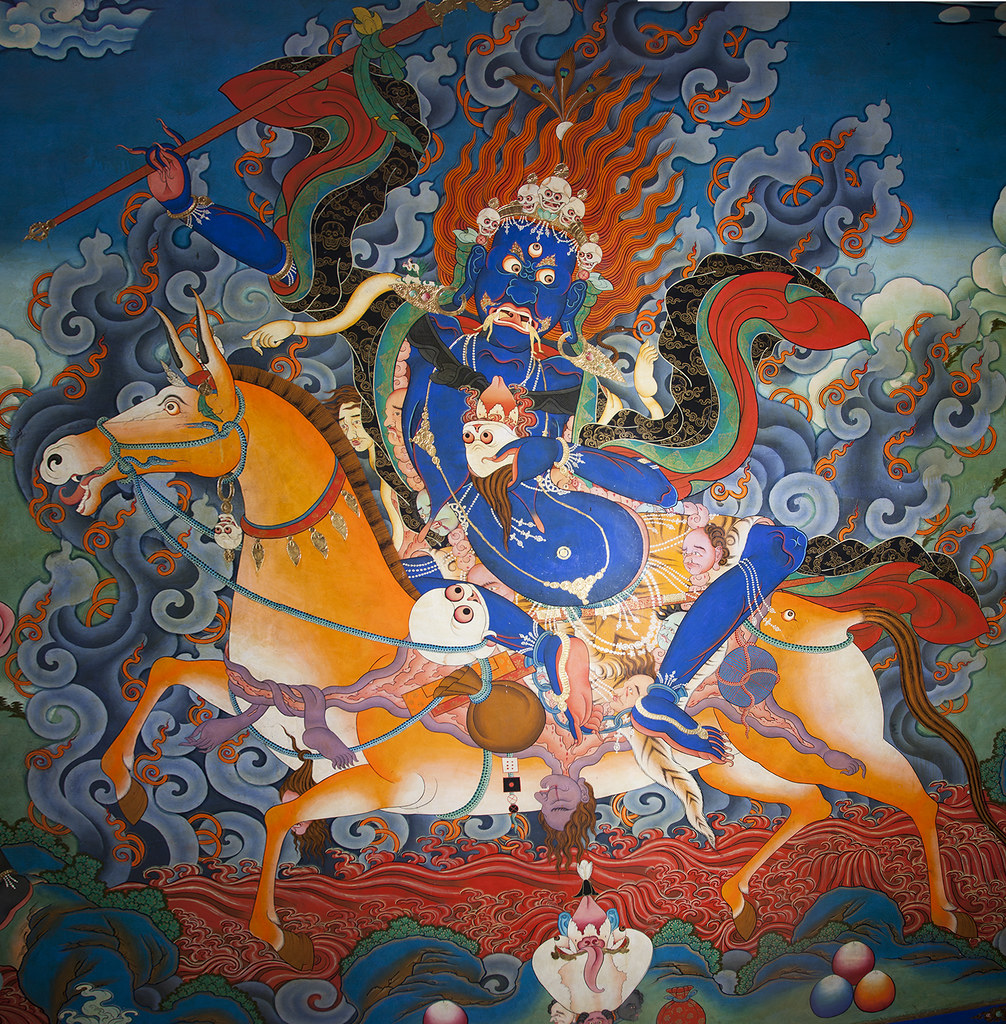
PALDEN LHAMO: BRIEF INTRODUCTION 


Palden Lhamo, Shri Devi (Sanskrit), is a protecting Dharmapala of the teachings of Gautama Buddha in the Gelug school of Tibetan Buddhism. She is also called Remati. She is the wrathful deity considered to be the principal Protectress of Tibet.

Palden Lhamo is the consort of Mahakala and has been described as "the tutelary deity of Tibet and its government", and as "celebrated all over Tibet and Mongolia, and the potent protector of the Dalai and Panchen Lamas and Lhasa."


She is said to reside in a lake within Tibet, called Lhamo Latso. The lake is charged with spiritual energy and is said to bestow visions of the future. One of the methods to search for a new incarnation of the Dalai Lama, the search party will meditate and propitiate Palden Lhamo by this lake.

I will live to be 110 years: Dalai Lama assures followers

Aug 28, 2019, | IANS

 
I will live to be 110 years: Dalai Lama assures followers

Dharamshala, Aug 27: Brushing aside concerns about his health, the Dalai Lama, 84, has assured his followers, especially Tibetans, that he is in the best of health and will live to be 110 years old. 

A video of his address to members of the Minnesota Tibetan Association at the Von Ngari Monastery on August 18 has been widely circulated on social media and was received with joy and relief by his followers around the world.

Concerns about his health were voiced following news that he had been admitted to a private hospital in Delhi due to a chest infection in April.

In his address, while consoling his followers, some of who could be heard weeping occasionally, the Dalai Lama recalled a dream in which the goddess of glory, one of the eight Dharma protectors and the protector deity of Tibet, Palden Lhamo riding on the back of the Dalai Lama proclaims that he will live for 110 years. 

The Dalai Lama also said that the other divinations carried similar foretelling, a statement from the Central Tibetan Administration said.

Holding a letter presented by the representative of Tibetans in Minnesota, the Dalai Lama reassured them again about his health while humorously remarking about the good functioning of his digestive tract. 

He also mentioned about the attention, support and best of medical services that were being provided to him by the Indian government.

Many among the six million Tibetans watched the video with tearful eyes and shared it with friends, parents, families, and colleagues.

"Tibetans have not forgotten me, and I will not forget you," said the Dalai Lama, as he patted one of the followers on the back while recounting a moment when thoughts of the Tibetan people flashed through his mind.


The Dalai Lama has lived in self-imposed exile in India since fleeing his homeland in 1959. 

I will live to be 110 years: Dalai Lama assures followers

Related image
 

Related image

Sunday, August 25, 2019

CHINA AND PAKISTAN. THE EVIL AXIS POWERS TORMENTING INDIA-TIBET RELATIONS

THE TWO EVIL DOCTRINES TORMENTING INDIA-TIBET RELATIONS FROM THE VERY BEGINNING

Image result for the british divide and rule policy

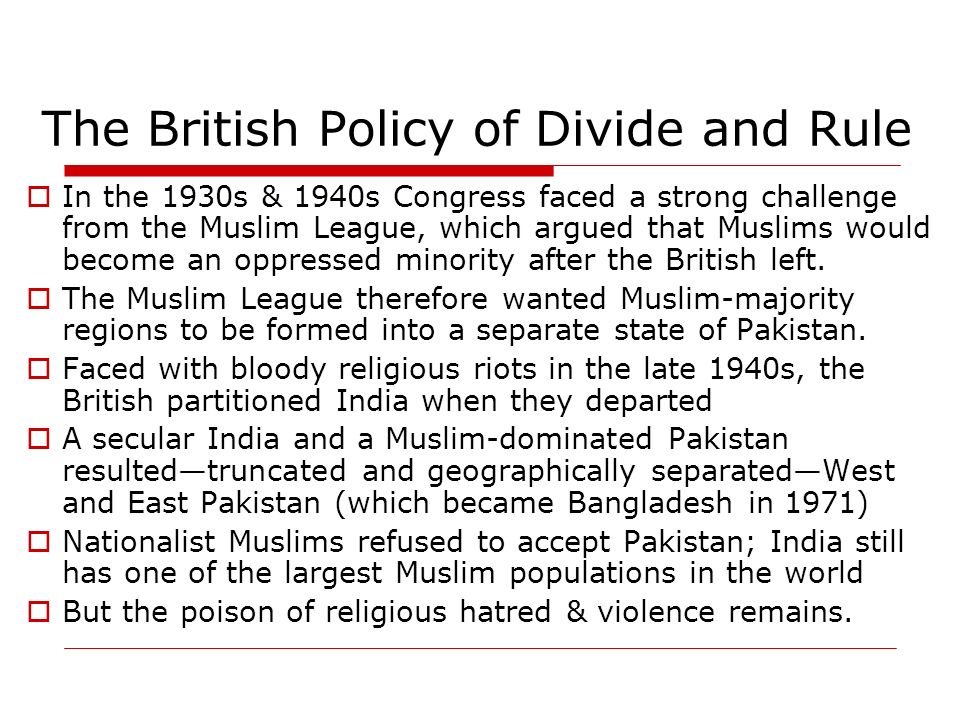
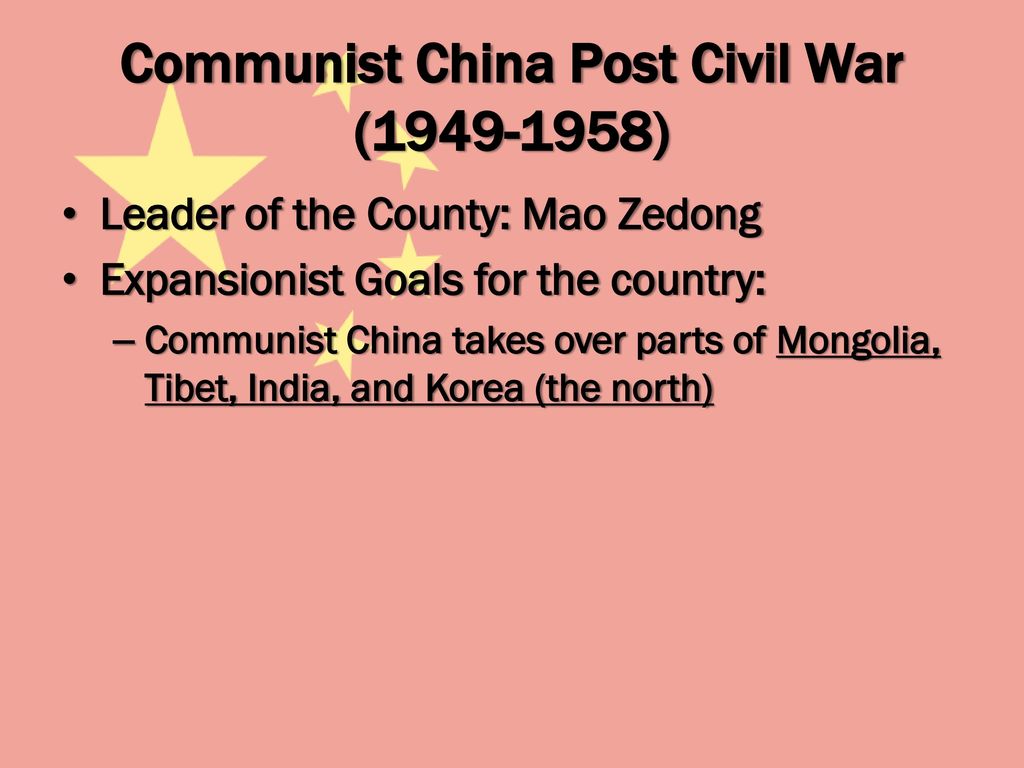
India gained full independence in 1947 but is besieged with two evil doctrines tormenting her from the very beginning. On one hand, India faces an insurmountable problem due to the evil doctrine of the 'Divide and Rule' policy of the British Empire to systematically weaken India using Pakistan as a hostile force. On the other hand, India faces a very serious threat to her security by the evil doctrine of 'Expansionism', the State policy of Communist China which replaced the Imperialist China in 1949. Apart from Pakistan's invasion and occupation of Kashmir, India faces the difficult challenge to defend the entire Himalayan Frontier which basically existed for several centuries with no troops guarding the border.

Image result for Chairman Mao Zedong's expansionist doctrine

I entirely agree with Indian Prime Minister Nehru's assessment made in 1953. India lacks the military capabilities to intervene in Tibet to counter Communist China's Expansionist Policy.

Rudra Narasimham Rebbapragada

Special Frontier Force

Review: Will Tibet Ever Find Her Soul Again? by Claude Arpi

Claude Arpi’s new book is particularly relevant as China rolls out the Belt and Road Initiative

BOOKS Updated: Apr 05, 2019 17:59 IST
Thubten Samphel
Thubten Samphel
Hindustan Times
A view of Lhasa, Tibet, on March 27, 2019.
A view of Lhasa, Tibet, on March 27, 2019.(VCG via Getty Images)
578pp, Rs 1550; Vij Books
 

The brilliance of new China’s leaders in pursuing their hard-nosed strategic objectives in Tibet was to weave a plausible narrative of ‘liberation’ around what was an outright invasion of the country. The other twist in the narrative was to force Lhasa to sign the 17-Point Agreement in 1951 in which Tibet promised to “return voluntarily to the lap of the motherland.” Half the world, largely the socialist camp, bought China’s story on Tibet.

The process of dealing with China’s fait accompli on the Roof of the World was particularly painful in the corridors of power in New Delhi. Should close cultural, commercial bonds and an open, unguarded border between India and Tibet blindside New Delhi to the changed new geopolitical reality in which the balance of power between independent India and new China had shifted in Beijing’s favor?

In dealing with the issue of Tibet, the two Asian giants brought two different mindsets. India had hoped, as articulated by Nehru, de-colonizing Asia and Africa would come together as one big family to work for common prosperity and peace. China on the other hand was there for itself, in whatever form that enduring Chinese imperial impulse was dressed up in the reigning ideology of the day.

At the time these events unfolded in Tibet, New Delhi’s man in Lhasa was Sumul Sinha. In his briefing to New Delhi about Chinese intentions, he wrote: “It seems to me that we are not facing fairly and squarely the realities of the situation here, inclined as we are to gloss over Chinese dislike and distrust for insignificant aliens like us, for no better reason than to keep Delhi in good humour and to keep alive the illusions of our policy-makers who still believe that much maligned Chinese are just as good today as they were in the past.”

Author Claude Arpi
Author Claude Arpi ( Courtesy the author )
 

In his briefing note to Major SM Krishnatry, the Indian Trade Agent in Gyantse, Sinha was brutally honest. He accused the People’s Liberation Army of doing a Robert Clive act on Tibet. “I hardly think that Chinese officials in Tibet can help being adventurous nor do I blame them for dreaming of conquest far beyond the confines of Tibet. They are physically placed at the outskirt of an empire and has happened in so much of history, think and behave like modern Clives and Hastings, always anxious to out-do their own achievements.”

In this Great Game played out between independent India and re-united China, Arpi’s ability to piece together all the confidential memos and exchange of notes in high places serve as a fly on the wall. His contribution on the subject will serve as a guide for new players not to repeat the mistakes of the past. With China rolling out the almost globe-girdling Belt and Road Initiative to improve sea and land connectivity to purportedly facilitate international trade but also to assert its political influence on the countries strung along the new Silk Road, the Great Game is being played with new vigour. Arpi’s contribution constitutes a playbook for the participants in the new Great Game, now rebranded and re-sold as the Belt and Road Initiative.

Image result for twin threats to India's security


Tuesday, August 20, 2019

KASHMIR PROBLEM COMPLICATES INDIA-TIBET RELATIONS


INDIA-TIBET RELATIONS COMPLICATED BY KASHMIR ISSUE

Image result for india-tibet relations

In my analysis, India-Tibet relations from the very beginning were impacted by Pakistan's invasion of Kashmir. The Kashmir issue poses a great danger severely undermining India's ability to exercise full freedom to formulate an independent Tibet Policy. India needs the support of the United States to counter China's military superiority and at the same time, India has to balance the US involvement in Kashmir in support of Pakistan's aggression.
Rudra Narasimham Rebbapragada
SPECIAL FRONTIER FORCE

Review: Tibet: When the Gods Spoke by Claude Arpi

Claude Arpi shows that the 1954 Panchsheel Agreement’s guiding principle of non-interference in and respect for each other’s territorial integrity left China to do in Tibet whatever it willed

BOOKS Updated: Aug 17, 2019 10:10 IST
Thubten Samphel
Thubten Samphel
Hindustan Times
In the run up to signing the Panchsheel agreement: Jawaharlal Nehru with Zhou Enlai, the first Premier of the People's Republic of China (both centre) at Palam Airport on 25 June, 1954.
In the run-up to signing the Panchsheel agreement: Jawaharlal Nehru with Zhou Enlai, the first Premier of the People's Republic of China (both center) at Palam Airport on 25 June 1954. (HT Photo)
572pp, Rs1,650; United Service Institution & Vij Books

Claude Arpi’s third volume on relations between India and Tibet covers the deepening Chinese penetration of the plateau and Beijing’s administrative and military consolidation there. The freehand given to China in its consolidation in Tibet was made possible when the two Asian giants signed the Panchsheel Agreement on Tibet in 1954. This was the document with which India withdrew its effective presence in Tibet in the form of two trade agencies and military escorts, though India’s mission in Lhasa operated as before. The agreement’s guiding principle of non-interference in and respect for each other’s territorial integrity left China to do in Tibet whatever it willed. Beijing imposed land ‘reforms’ and new leadership and administrative structure that led to the 1959 uprising against Chinese rule.

Digging deep into India’s national archival treasure trove, Claude Arpi has pulled out a real gem. This gem is the assessment of the various Indian officers, and of the character and motives of those figures, both political and spiritual, within the Tibetan leadership structure. The comments by India’s Tibet hands include the urgent need for Tibet to reform its social structure, making it fair and just for all Tibetans. This Indian examination of the strength and weakness of the Tibetan leadership came for closer scrutiny when the Dalai and Panchen Lamas visited India in 1956 for the Buddha Jayanti commemorations.

These lengthy and fascinating reports were submitted to New Delhi by Apa Pant, the political officer based in Gangtok, who dealt with affairs of Tibet, Bhutan and Sikkim, PN Menon, the former Indian consul general in Lhasa, and PN Luthra, special officer of border areas in the Ministry of External Affairs.

Apa Pant also suggested that “The Chinese have also a doctrine of social revolution and change which they are certain will help the common man. The Tibetans shall have to have an equally powerful dynamic policy of social change.”

Apa Pant made this fearful prediction. With China creating the conditions for the settlement of Tibet by Chinese migrants, “Tibet, as we know it today, will be annihilated, the process for its complete absorption into China (has) started.”
Claude Arpi
Claude Arpi ( Courtesy the author )

As for the time he spent with the Panchen Lama, Luthra wrote, “At a certain stage of the tour, it became possible to freely and frankly discuss any matter, however delicate, with the Panchen Lama himself or some of his principal associates.” Luthra was impressed by the Panchen Lama’s ability to recognize faces. He was, Luthra wrote, careful to “recognize the humbler staff such as motor drivers and dispatch-riders.” The Panchen Lama told Luthra that he did not believe in the “superstitious practices of Tibetan society. The Dalai Lama’s consultation with his oracle to decide the date of his departure to India had caused the Panchen Lama much amusement.” Luthra wrote, “I once asked the Panchen Lama what it felt like to be the incarnation of Amitabha. He replied that he had no such consciousness nor does he possess any supernatural powers. He struck me as a man without pretensions.”

According to Luthra, despite the traditional rivalry between Lhasa and Shigatse and the court politics of the two Lamas, “There seems to exist personal friendly accord as one would imagine between two youths who have so much in common… I have seen them cutting jokes, thumping each other’s backs and exchanging warm greetings.”

The third major voice to offer his commentary on the Tibetan political scene is that of PN Menon. He spent two years as India’s consul general in Tibet. In 1956 he was assigned to the Dalai Lama’s party. According to Menon, the weakness of the Tibetan struggle was “the real lack of a sense of unity and political consciousness in the way we understand it. At times the conflicting advice seemed to make the Dalai Lama rather confused…” But according to Menon, the Tibetan leader’s basic common sense seemed to “guide him away from the pitfalls of some of the advice offered.”

Thubten Samphel is an independent researcher and a former director of the Tibet Policy Institute
First Published: Aug 16, 2019, 18:31 IST


Wednesday, July 17, 2019

THE CONCEPT OF ATTRACTIVE FEMALE DALAI LAMA REINCARNATION

THE CONCEPT OF ATTRACTIVE FEMALE DALAI LAMA REINCARNATION. BEAUTY AND ATTRACTION OF GOD LIE IN THE EYE OF BELIEVER

Although beauty may be in the eye of the beholder, the feeling of beiqg beautiful exists olely mind of the beheld @www.brainquotes.org - Martha Beck Feelings uuotes

The Successor of the Dalai Lama will be decided by the Dalai Lama. The Successor, Male or Female will be the embodiment of Truth, Bliss and Beauty described in the Indian Tradition as Satyam, Shivam, and Sundaram. The Beauty and Attraction of God always lie in the Eye of Believer.

Rudranarasimham Rebbapragada
SPECIAL FRONTIER FORCE
"Your eyes will see the King in His beauty" (Isa. 33:17a); "the King will desire your beauty ' (Psa. 45:11a). www.agodman.com

Will myself decide on my successor: Dalai Lama

Tibetan spiritual leader Dalai Lama. (File Photo: IANS)


Will myself decide on my successor: Dalai Lama


IANS

By Vishal Gulati
Dharamshala, July 15 (IANS) Tibetan spiritual leader the Dalai Lama, respected by millions as a living god, who has been caught in a controversy over his recent joke that his successor a female Dalai Lama would have to be "more attractive", has clarified that his reincarnation is to be decided by him.
The Buddhist monk had apologized for his "attractive" female successor remark, saying he genuinely meant no offense and offered his sincere apologies if people were hurt by what he had said.
However, aides in his private office in this northern Indian town on Monday clarified there is no question of the search for his successor as the Dalai Lama, 84, announced in 2011 that he would decide at 90 whether or not he should have a successor.
The issue of reincarnation is his personal right, an aide in the Dalai Lama's office told IANS.
At the same time, the globe-trotting monk warned that any candidate chosen for political ends by anyone, including China, should not be recognized or accepted.
The aide said still there is no certainty that whether the institution of the Dalai Lama should continue or not after the 14th and current Dalai Lama, Tenzin Gyatso.
"My reincarnation is to be decided by myself, nobody has the right to decide about that," he often said in his remarks.
"One day you will hear that the Dalai Lama has passed away, but I will come back, even if the institution of Dalai Lama is no longer recognized. I will be back," a post on his website quoting the Dalai Lama said.
But who is next after the Dalai Lama?
At the present moment, the Dalai Lama's institution is useful to the Tibetan culture and the Tibetan people.
"Thus, if I were to die today, I think the Tibetan people would choose to have another Dalai Lama. In the future, if the Dalai Lama's institution is no longer relevant or useful and our present situation changes, then the Dalai Lama's institution will cease to exist," the monk said in a post.
"Personally, I feel the institution of the Dalai Lama has served its purpose. More recently, since 2001 we now have a democratically elected head of our administration, the Kalon Tripa.
"The Kalon Tripa runs the daily affairs of our administration and is in charge of our political establishment. Half-jokingly and half-seriously, I state that I am now in semi-retirement."
In August 2011 when Lobsang Sangay took over the reins of the government-in-exile from the monk and scholar Samdhong Rinpoche, who held the post for 10 years but was overshadowed by the Dalai Lama, the Dalai Lama announced: "When I am about 90, I will consult the high lamas and re-evaluate whether the institution of the Dalai Lama should continue or not."
On his birthday on July 6 this year, he said, "I am now 84, but I hope to be able to celebrate the occasion with all of you for many more years to come."
Clarifying this month on his remark during a BBC interview that has caused disquiet, the Dalai Lama recalled the conversation on the physical appearance of a female successor with the then Paris editor of Vogue magazine, who had invited him in 1992 to guest-edit the next edition.
She asked if a future Dalai Lama could be a woman. His Holiness replied, "Certainly if that would be more helpful," adding, as a joke, that she should be attractive, said a statement by his office.
The Dalai Lama was at least partially responding to the unfamiliar ambiance of working with a team whose prime focus was the world of high fashion.
On the Chinese stating that the next Dalai Lama will be born in Tibet and chosen by them, he said: "If the present situation regarding Tibet remains the same, I will be born outside Tibet away from the control of the Chinese authorities. This is logical. The very purpose of a reincarnation is to continue the unfinished work of the previous incarnation."
His Holiness the 14th Dalai Lama, Tenzin Gyatso, describes himself as a simple Buddhist monk.
In 1989, the Dalai Lama won the Nobel Peace Prize for his non-violent struggle for Tibet. He was awarded the US Congressional Gold Medal in October 2007, even in the face of protests by China.
The Dalai Lama now lives in exile along with some 140,000 Tibetans, over 100,000 of them in different parts of India. Over six million Tibetans live in Tibet.
(Vishal Gulati can be reached at vishal.g@ians.in)
--IANS
(This story was auto-published from a syndicated feed. No part of the story has been edited by The Quint.)
B&Ã¥uty


TIBET. MY LAND, MY PEOPLE

TIBETAN NATIONALISM. THE LAND DESCRIBES TIBETAN IDENTITY

TIBETAN NATIONALISM. THE LAND DESCRIBES TIBETAN IDENTITY

D7B3304E-2BCB-4E63-BB6E-14DD1117F452.jpg
The Tibetan Identity arises from the Land and all its denizens. The Spirit of Independent Lifestyles is ingrained into the Tibetan Psyche on account of Natural Forces, Natural Factors,  Natural Conditions, Natural Causes, and Natural Mechanisms that shape Tibet's Geography and give meaning to the Tibetan Existence.

Rudranarasimham Rebbapragada
Special Frontier Force

6A6C6B8F-BD0D-4403-939C-290DDC507918.jpg


The scenery along the highway linking Lhasa with Nyingchi in Tibet

C54741AC-3DE6-4158-B794-189B7C29B4BB.jpg
Photo taken on July 16, 2019, shows a scenery along the highway linking Lhasa with Nyingchi in southeast Tibet. (Photo: Xinhua)
B85A87CD-DB6D-4A23-8FEA-670C64E9B40B.jpg
Photo taken on July 16, 2019, shows a scenery along the highway linking Lhasa with Nyingchi in southeast Tibet. (Photo: Xinhua) 
NEWS CN
Photo taken on July 16, 2019, shows a scenery along the highway linking Lhasa with Nyingchi in southeast Tibet. (Photo: Xinhua)
94767BC6-B80E-4DB3-9466-BABBA8F387CF.jpg
Photo taken on July 16, 2019, shows a scenery along the highway linking Lhasa with Nyingchi in southeast Tibet. (Photo: Xinhua)  
10941EDE-D7C9-4887-B264-CE8686467CF3.jpg
Photo taken on July 16, 2019, shows a scenery along the highway linking Lhasa with Nyingchi in southeast Tibet Autonomous. (Photo: Xinhua)
FB94C8C1-8FBC-400D-BCD7-74F49C0CF731.jpg
Tibet. My Land, My People.


Thursday, June 20, 2019

I AM A REFUGEE WITH NO REFUGE ON WORLD REFUGEE DAY

I AM A REFUGEE WITH NO REFUGE ON WORLD REFUGEE DAY

World Refugee Day June 20
I host 'The Living Tibetan Spirits' in my Consciousness. On Thursday, June 20, 2019, I observe the World Refugee Day with the feelings of hopelessness for I am a Refugee and I have no Refuge.

Rudranarasimham Rebbapragada
SPECIAL FRONTIER FORCE

WORLD REFUGEE DAY - June 20, 2019


BDDF3278-6B09-42A2-991D-E3B0A208C141.png


Each June 20, the globe comes together to honor World Refugee Day. The United Nations General Assembly launched the holiday in 2000, and since then, the worldwide community has spent the day focused on ways to improve the lives of refugees. Most of us know that refugees are forced to leave their homes due to war, terror, or other crises—but fleeing their home country is often just the beginning of a difficult journey. Many refugees find themselves living in camps until they are resettled—some of which are dangerous or not well-equipped for long term living. Refugees don’t always have a say in which country they are ultimately relocated to, and the bureaucratic process involved in finding their new home can take years. Worldwide refugee crises have taken center stage in the news in recent years, so it’s more important than ever to share support and to celebrate World Refugee Day.

How to Observe World Refugee Day

1.                          Attend a United Nations event

The UN plans to host live digital events on World Refugee Day discussing the world refugee crisis, future goals surrounding the topic, and how to make a difference. Be on the lookout for summaries of the events’ happenings, or see if you can attend for yourself.
2.                          Be a friend to refugees in your community

Reach out to refugees in your area. Consider inviting them into your home for dinner, or to spend a few nights in your guest room if they’re in need of somewhere to stay. Introduce them to your local community so they’ll have an easier time getting to know their new neighborhood. Simply being a friend can make a major positive impact in someone’s life, and serving as a guide to the community can be incredibly helpful.
3.                          Use your job to make a difference

No matter what you do for a living, there’s a good chance that your professional skills can be used to improve the lives of others. Volunteer your work-related talents to local refugee organizations. Last year, the UN shared a goal that someday soon, every refugee would have the opportunity for an education, a safe place to live, and ways to work and contribute to their communities. Chances are, you’ve got a skill or talent that can help in working toward one of those goals. If you own a business or are a hiring manager, you may also consider employing local refugees who are in need of work.

Why World Refugee Day is Important


1.   It builds empathy and raises awareness

The vastness of the world refugee crisis can be hard to grasp, but raising awareness can help make it easier for others to understand the extent of what refugees around the world are going through. It also builds a sense of empathy and compassion that brings people together from all walks of life, and that’s always a positive thing.

2.   It provides an incentive to create a more peaceful world

In a more peaceful world, fewer people would be forced to flee their homes due to violence and unrest. Naturally, this would make for a significant decrease in suffering around the world. While working towards greater peace isn’t something that can happen overnight, it’s an important goal, and World Refugee Day reminds us of just how vital it is.


3.   It encourages us to be better friends, neighbors, and citizens

It’s easy to feel helpless in the face of such a massive worldwide crisis, but taking small steps can help make a difference. World Refugee Day encourages all of us to think creatively about what we can do to help. It also motivates everyone celebrating the holiday to be better neighbors to refugees living in their communities and to be more compassionate world citizens in general.

UNHCR The UN Refugee Agency World Refugee Day June 20


.

Thursday, April 4, 2019

LIVING TIBETAN SPIRITS: A FIGHT FOR SURVIVAL


LIVING TIBETAN SPIRITS: A FIGHT FOR SURVIVAL

Living Tibetan Spirits: A Fight For Survival.


The Living Tibetan Spirits continue to wage a Fight for Survival as they have not yet reached the Final Destination in Life. The Fight for Tibet is the only option while the Dalai Lama is trapped in Exile.

Rudranarasimham Rebbapragada
SPECIAL FRONTIER FORCE


Clipped from: https://www.cnn.com/videos/tv/2019/04/02/news-stream-kristie-lu-stout-dalai-lama-pkg.cnn

Living Tibetan Spirits: A Fight For Survival.

Duration: 03:29


Tibet's highest spiritual leader fled his home country and began his life as an exile - advocating for the country's cultural autonomy. But as China's grip on Tibet tightens, his fellow Tibetans may face a fight for survival.


CNN
Living Tibetan Spirits: A Fight For Survival.