Reflections on the 50th Anniversary of Bangladesh Independence Day
The term ‘Refugee’ has entered my life story with the tragic humanitarian crisis in Bangladesh. The term ‘Refugee’ is also central to my military mission in the Special Frontier Force where I worked with thousands of Refugees who were brutally expelled from Occupied Tibet. On March 26, 2021, the term ‘Refugee’ is still the central focus of my life story. My direct, physical involvement with the problems of Refugees from Bangladesh and Tibet has impacted my life journey and today I think of myself as a Refugee without Refuge while I may live in a Free Country.
March 26, 2021. Musings on the 50th Anniversary of Bangladesh Independence Day
I was granted Short Service Regular Commission in the Indian Army Medical Corps during September 1969 while I was studying in Kurnool Medical College, Kurnool, Andhra Pradesh, India. On March 26, 1971 I was serving in the Military Hospital, Ambala Cantonment, Haryana, India undergoing the professional training to serve as a Medical Officer in the Indian Army Medical Corps. It was becoming increasingly clear that a huge crisis was brewing up in East Pakistan with immediate consequences to my military career. It did not take too long for the real possibility of War between India and Pakistan to materialize on account of a major influx of Bangla refugees into India from East Pakistan.

On July 26, 1971, I finished my professional training and was granted two months of annual leave. Just after a month of my leave, I received a telegram at my home in Rajahmundry, that asked me to immediately report back to my military duty at the Military Hospital in Ambala. On September 22, 1971, I was promptly dispatched to serve in Special Frontier Force-Establishment No. 22-Vikas Regiment to begin my military career as a Medical Officer and got fully involved in the launching of military action to initiate the Liberation of Bangladesh.
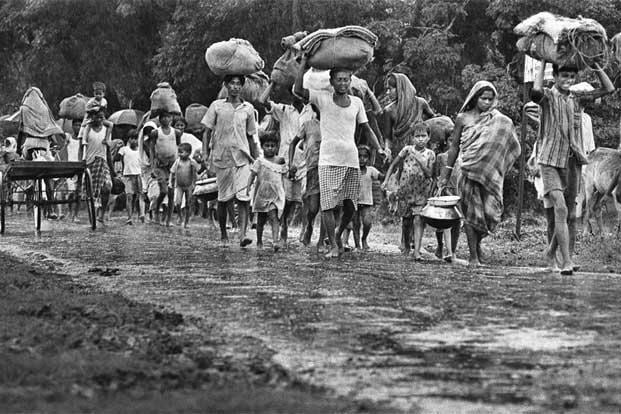
The term ‘Refugee’ has entered my life story with the tragic humanitarian crisis in Bangladesh. The term ‘Refugee’ is also central to my military mission in the Special Frontier Force where I worked with thousands of Refugees who were brutally expelled from Occupied Tibet. On March 26, 2021, the term ‘Refugee’ is still the central focus of my life story. My direct, physical involvement with the problems of Refugees from Bangladesh and Tibet has impacted my life journey and today I think of myself as a Refugee without Refuge while I may live in a Free Country.

I am pleased to share the blog post titled “Looking Away From Genocide” authored by Gary J Bass, Professor of Politics and International Affairs at Princeton University. This blog includes excerpts from the conversation between US President Richard M Nixon, and US National Security Adviser Dr. Henry Alfred Kissinger. President Nixon makes a direct comparison to the slaughter in East Pakistan to other atrocities against humanity and asks Kissinger for his opinion on Biafra massacre(Nigeria) and the persecution of Jews in Germany by Hitler. President Nixon reveals his personal understanding of such historical events in this brief conversation and it would have a most chilling effect on any reader. I am not surprised to note that Kissinger had no interest in formulating a true national security policy. He was totally obsessed with his own plans to dominate the foreign policy conversation and getting rid of William P Rogers, the US Secretary of State. In the face of such moral bankruptcy, India’s Prime Minister Indira Gandhi had boldly launched her Secret War in East Pakistan and I am glad that I had participated in the training of Bengali guerrilla fighters and later initiated the Liberation of Bangladesh on 03 November, 1971 with military action in the Chittagong Hill Tracts with attacks on Pakistani border posts deep inside the enemy territory.
SERVICE INFORMATION:
R. Rudra Narasimham, B.Sc., M.B.B.S.,
Personal Numbers:MS-8466/MR-03277K. Rank: Major.
Branch:Army Medical Corps/Short Service Regular Commission(1969-1972); Direct Permanent Commission(1973-1984).
Designation:Medical Officer.
Unit:Establishment No.22(1971-1974)/South Column,Operation Eagle(1971-1972).
Organization: Special Frontier Force.
NOVEMBER 20, 2013
LOOKING AWAY FROM GENOCIDE
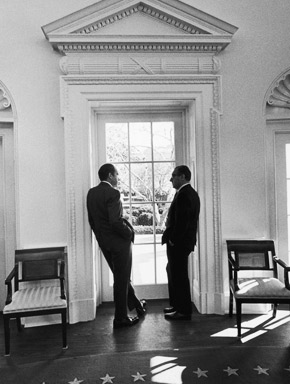
US President Richard M Nixon in his taped conversation with US National Security Adviser Dr. Henry Kissinger reveals his personal understanding of historical events such as the persecution of Jews in Germany by Hitler, the massacre of black Catholics in Biafra region of Nigeria, the slaughter of civilian population of East Pakistan. I am not surprised to note that they had no sympathy for the suffering of Tibetan people and they took the sinful action to formulate a new US foreign policy that involved establishing trade, commerce, and diplomatic relationships with Communist China.
POSTED BY GARY BASS
On March 25, 1971, the Pakistani Army launched a devastating military crackdown on restive Bengalis in what was then East Pakistan. While the slaughter in what would soon become an independent Bangladesh was underway, the C.I.A. and State Department conservatively estimated that roughly two hundred thousand people had died (the official Bangladeshi death toll is three million). Some ten million Bengali refugees fled to India, where untold numbers died in miserable conditions in refugee camps. Pakistan was a Cold War ally of the United States, and Richard Nixon and his national-security advisor, Henry Kissinger, resolutely supported its military dictatorship; they refused to impose pressure on Pakistan’s generals to forestall further atrocities.
My new book, “The Blood Telegram: Nixon, Kissinger, and a Forgotten Genocide,” tries to reconstruct this dark chapter of the Cold War, using declassified documents, investigative reporting, and countless hours of White House tapes, including about a hundred newly transcribed conversations. Thanks to the secret taping system that he installed to record his own blunt conversations, Nixon inadvertently left behind the most transparent Administration in American history. The tapes offer the most revealing account of Nixon and Kissinger’s raw thinking. Staffers at the White House and the State Department were often more pragmatic than their principals, so the documents they produced make the Administration appear more moderate than it was. It’s only on the audio tapes that Nixon and Kissinger’s full radicalism is on display.
But the White House tapes are maddeningly hard to use. The State Department’s official historians have done excellent work in declassifying some of the most sensitive discussions, but to this day, particularly embarrassing portions of the tapes are bleeped out on the basis of specious national-security concerns. (I’ve made my own requests for a mandatory declassification review of these bleeps under the terms of an executive order.) The tapes remain a largely untapped resource, in part because they are enormous, unwieldy, badly organized, often bleeped, crackly, laborious to transcribe, and hard to understand.
You can hear Nixon and Kissinger at work in the following audio clip, which is followed by an annotated transcript I made for “The Blood Telegram.” (Some snippets from this conversation are available in a volume of the State Department’s “Foreign Relations of the United States” series, but this is the first full transcript.) This discussion, which also involved the White House chief of staff, H. R. Haldeman, took place not long after the start of the crackdown in East Pakistan. Nixon and Kissinger are having one of their typically prolix and digressive conversations, concentrating this time on foreign policy. The tape is unusually clean: the sound quality is good, and there are no bleeps, though there is some music playing in the background.
The clip below begins just as the conversation has turned from the Vietnam War to the possibility of an opening to China. To establish communications with Mao Zedong’s regime, the White House was exploring several clandestine channels, including messages carried to the Chinese leadership by Romania’s Communist despot, Nicolae Ceausescu, and Pakistan’s military dictator, General Agha Muhammad Yahya Khan, known as Yahya. The Pakistan channel would soon culminate in Kissinger’s first secret trip to Beijing, in July, 1971. He flew direct from Pakistan, which provided an airplane and a cloak-and-dagger cover story—another reason for the White House to support Pakistan even as the killing continued.
WHITE HOUSE TAPES
OVAL OFFICE 477-1
APRIL 12, 1971, 10:24-10:33 A.M.
NIXON: Now, another thing. I want to know about Yahya and Pakistan.
Nixon had a great personal fondness for Pakistan’s military ruler, who was carrying out the brutal crackdown on the Bengalis. “He’s a decent man,” Nixon repeatedly said, as the death toll mounted.
I want to be sure that we’re not caught in a crack here where State then puts out a whole lot of stuff that they’ve done. Now Bill has not said that he wants to say anything about Pakistan, has he?
The President seems to be making sure that the distrusted State Department would not, on its own, condemn Yahya for killing Bengalis. “Bill” is William Rogers, Nixon’s ineffectual Secretary of State, who had been reduced to near-total irrelevance by his rival Kissinger.
KISSINGER: No.
NIXON: Has Sisco?
Joseph Sisco, the headstrong assistant secretary of state for Near Eastern and South Asian affairs, was a particular annoyance to Nixon and Kissinger, who would later call him “a maniac” and “such a whore.”
KISSINGER: No. But it’s out there, out there [indistinct]. The Dhaka consulate is in open rebellion.
American diplomats in East Pakistan, horrified by the slaughter, had been reporting the killing in gruesome detail. On April 6th—just a few days before this conversation—the U.S. consul general in Dhaka, Archer Blood, sent a telegram signed by almost all of the U.S. officials in East Pakistan, formally voicing “strong dissent” from the White House’s pro-Pakistan policy, which they characterized as “moral bankruptcy” in the face of “genocide.” In retaliation, Nixon and Kissinger would soon eject Blood from his post in Dhaka.
NIXON: I understand…[indistinct] I want to know how we can respond to it [indistinct]. We’re going to be…[indistinct] you know what I mean?
KISSINGER (emphatically): Mr. President, we’re going to wind up on the worst side if we start backing a rebellion there now.
Though Nixon and Kissinger were discussing actual rebellions in East Pakistan and Biafra, Kissinger was also accusing Blood of “open rebellion” for having sent his formal cable of dissent through official channels. Kissinger would later call Blood “this maniac in Dacca, the Consul General who is in rebellion.”
NIXON: But Bill—but Henry, we did not back the rebellion in Biafra, did we?
Even before the crackdown in East Pakistan began, U.S. officials had warned that the country could descend into the kind of bloody chaos that had recently been seen in Biafra, an oil-rich region of Nigeria that attempted to secede in 1967. The Nigerian government managed to crush the Biafran resistance in 1970. As a candidate for President in 1968, Nixon had denounced genocide in Biafra; by 1971, yesterday’s inaction in Biafra had become a rationale for today’s support of Pakistan.
KISSINGER: That’s right.
NIXON: That’s a hell of a lot more reasonable. I know, there are less people in Biafra. Is that the reason? Does morality become—look, there weren’t very many Jews in Germany.
As Nixon knew, Kissinger was one of those German Jews; at least thirteen of his close relatives had been murdered in the Holocaust.
KISSINGER (murmurs): That’s right.
NIXON: Was it immoral—was it therefore not immoral for Hitler to kill them?
Nixon, unprompted, is comparing the slaughter in East Pakistan to Biafra and the Holocaust.
KISSINGER (murmurs): That’s right.
Kissinger goes along with Nixon’s comparison of Hitler and Yahya, but still maintains his support for the Pakistani dictator.
NIXON: See, that’s my— [indistinct] And the Biafrans are black— [indistinct] Catholics!
This part is hard to hear, but may be about how Americans ignored the Biafrans because they were black, and about Catholic support for the Biafran cause. As Nixon later said, “Biafra stirred up a few Catholics.”
KISSINGER: Mr. President, if we get in there now—
NIXON (cross-talk): It’s ridiculous.
KISSINGER: —we get West Pakistan turned against us, and we get—the Bengalis are going to go left anyway.
The State Department had repeatedly noted that the Bengali leadership was quite pro-American, but Kissinger dismisses that.
NIXON: Yeah.
KISSINGER: They are by nature left. Their moderate leadership is in jail, maybe they shouldn’t have been put in jail, but that’s the way it is now, and, uh—
Kissinger realizes he’s made a wrong turn, is actually criticizing Yahya, and falls awkwardly silent.
NIXON: I just want to [indistinct]… get a little work… [indistinct] Is that in the West—West Pakistan thing or not? [indistinct]
KISSINGER: Why don’t you wait ’til Wednesday, Mr. President, when we have the meeting and then we can get a paper to you.
NIXON: All right.
KISSINGER: Because I am afraid in the present state of the State Department if you interfere too early—
NIXON (annoyed): I’m not interfering, I just want to know what he thinks!
Nixon snaps at Kissinger for the nonstop bureaucratic combat against Rogers. To handle Kissinger’s obsessive feuding with the Secretary of State, the President had Haldeman set up an informal “Henry-handling committee.” In the end, Kissinger drove Rogers out, and claimed both top foreign-policy jobs, national-security advisor and Secretary of State.
KISSINGER: Well, he’s going to submit a paper to us and then you’ll know what you think—what he thinks.
NIXON: Oh. He’s going to submit a paper?
KISSINGER: Yeah.
NIXON: You’re sure he knows I want it?
KISSINGER: Oh yes, he knows you want it. No, he’s—Bill is all right.
Kissinger starts to walk back, trying to praise Rogers.
Bill is—
NIXON: I just got to know what the hell they think. I mean, I’m not trying to—… [indistinct] I think if we get in the middle of the whole thing [indistinct], it’s a hell of a mistake.
KISSINGER: It’s a disaster. No one else is doing it.
NIXON: Look—let’s face it. The people that bitch about Vietnam bitched about it because we intervened in what they say was a civil war.
This was one of Nixon’s most potent arguments to silence Americans who were outraged by the suffering in East Pakistan. Democrats like Ted Kennedy, the White House argued, were simply trying to drag the United States into another civil war in Asia.
KISSINGER: That’s right.
NIXON: Now some of those same bastards, like… [indistinct] want us to intervene in Biafra. And some of those same people want us to intervene here. Both civil wars. Real civil wars. Now what in the hell are we talking about?
KISSINGER: They want us to cut out economic aid to West Pakistan.
NIXON (surprised): For what reason?
Kissinger is careful to defend U.S. aid to the Pakistani military government, despite the atrocities. Blood had argued that the bloodshed in East Pakistan was a very good reason to cut off economic aid to Yahya.
KISSINGER: It’s—pure doctrinaire reasons. Because India is screaming in turn, because they’re scared to death of their own Bengalis. Deep down the Indians don’t really want an independent East Pakistan, because within ten years of that the West Bengalis are going to start bringing pressure on them for autonomy. It’s a classic situation for us to stay out of. There’s nothing for us in there to take sides in this. And for us to cut off aid will infuriate the West Pakistanis.
Millions of Bengalis in India were deeply shocked by the killing of their brethren across the border in East Pakistan. The Indian state of West Bengal, unstable and impoverished, was already a headache for the Indian government—and the crackdown in East Pakistan sent some ten million refugees fleeing into India’s border states, above all into West Bengal. This left the Indian government fearful of further unrest in the state, and desperate to find a way to get the refugees to return home. India secretly sponsored Bengali guerrillas fighting back against Pakistani troops. Finally, in December, 1971, India and Pakistan would fight a brief fourteen-day war, ending with an Indian victory and the creation of the new country of Bangladesh.
Unlike Blood and the other Americans in Dhaka, Kissinger seems not to realize that the loss of so many Bengali lives might impact American foreign policy. For all his mastery of the use of American leverage, he nevertheless rules out the possibility of applying any pressure on the Pakistani military.
Photograph by Frederic Lewis/Hulton Archive/Getty
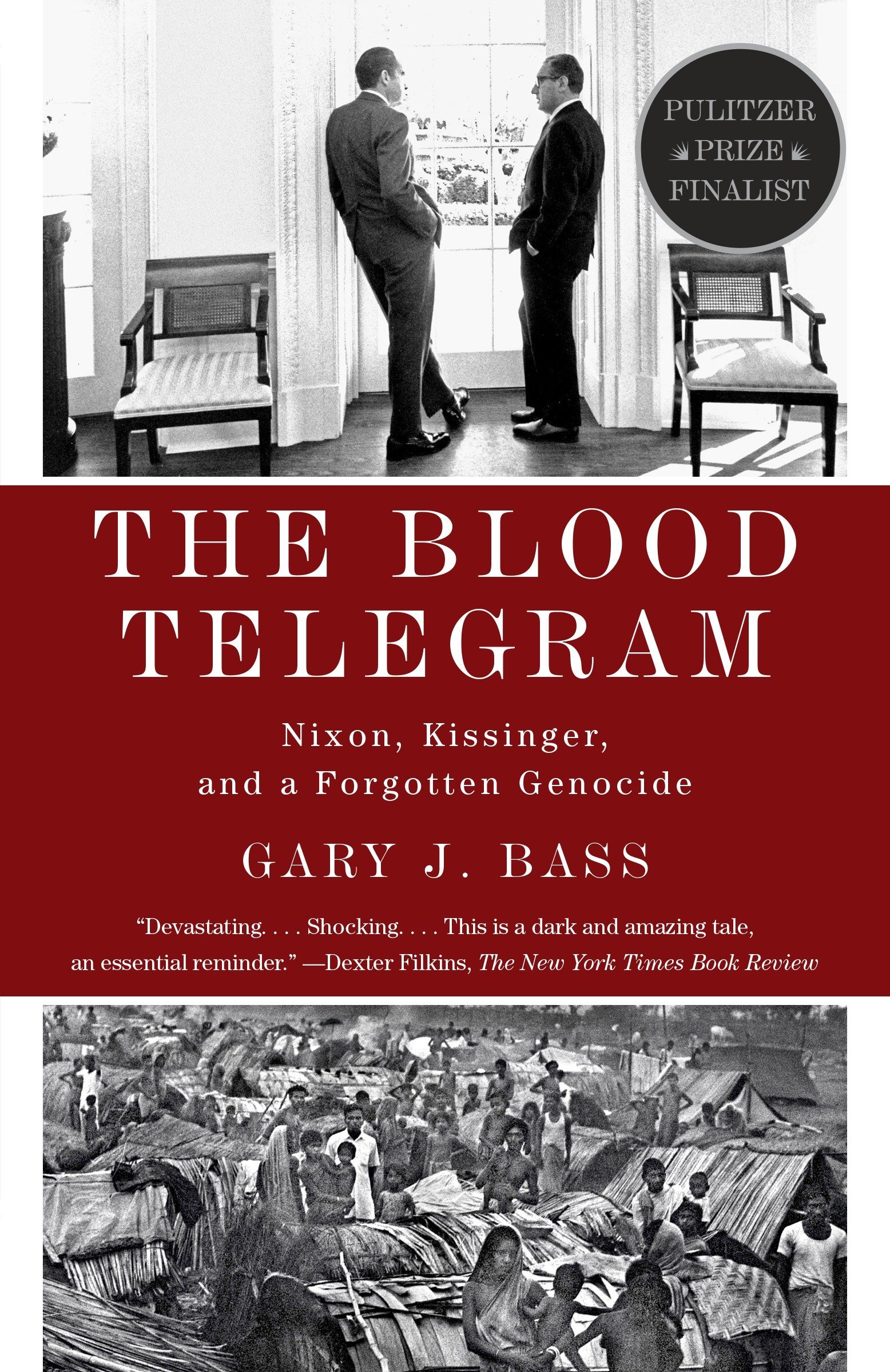
Nixon and Kissinger: A Forgotten Genocide in Bangladesh


