LADAKH, THE BATTLEFIELD TO TEST THE US-INDIA-TIBET ALLIANCE
In my analysis, the importance of Ladakh lies in its value as the Battlefield to test the US-India-Tibet Alliance.
Rudra Narasimham Rebbapragada
Ann Arbor, Michigan, 48104-4162. USA
SPECIAL FRONTIER FORCE
Ladakh: the good, bad and ugly sides to India’s ‘Little Tibet’, high in the Himalayas
- A new tunnel will provide year-round access to an area usually cut off by snow for seven months of the year
- Even without it, Ladakh’s resources and environment are already being stretched to breaking point

Pangong Tso, the highest salt lake in India. Photo: Shutterstock
The good
Known as Little Tibet due to a shared cultural and religious heritage, Ladakh (now, Union Territory of India) in the Indian State of Jammu and Kashmir, is about the size of England, with a population similar in number to that of the Hong Kong district of Wan Chai.
The name derives from “la dags” meaning “land of mountain passes” and it’s a region characterized by high-altitude desert hemmed in by the mighty Himalayan and Karakoram ranges.
Cut off from the rest of the country by snow for seven months of the year, India’s northernmost region comes alive in summer. Deserts with the texture of eczema are lubricated by rivers swollen with snowmelt and the run-off from dazzling turquoise lakes.
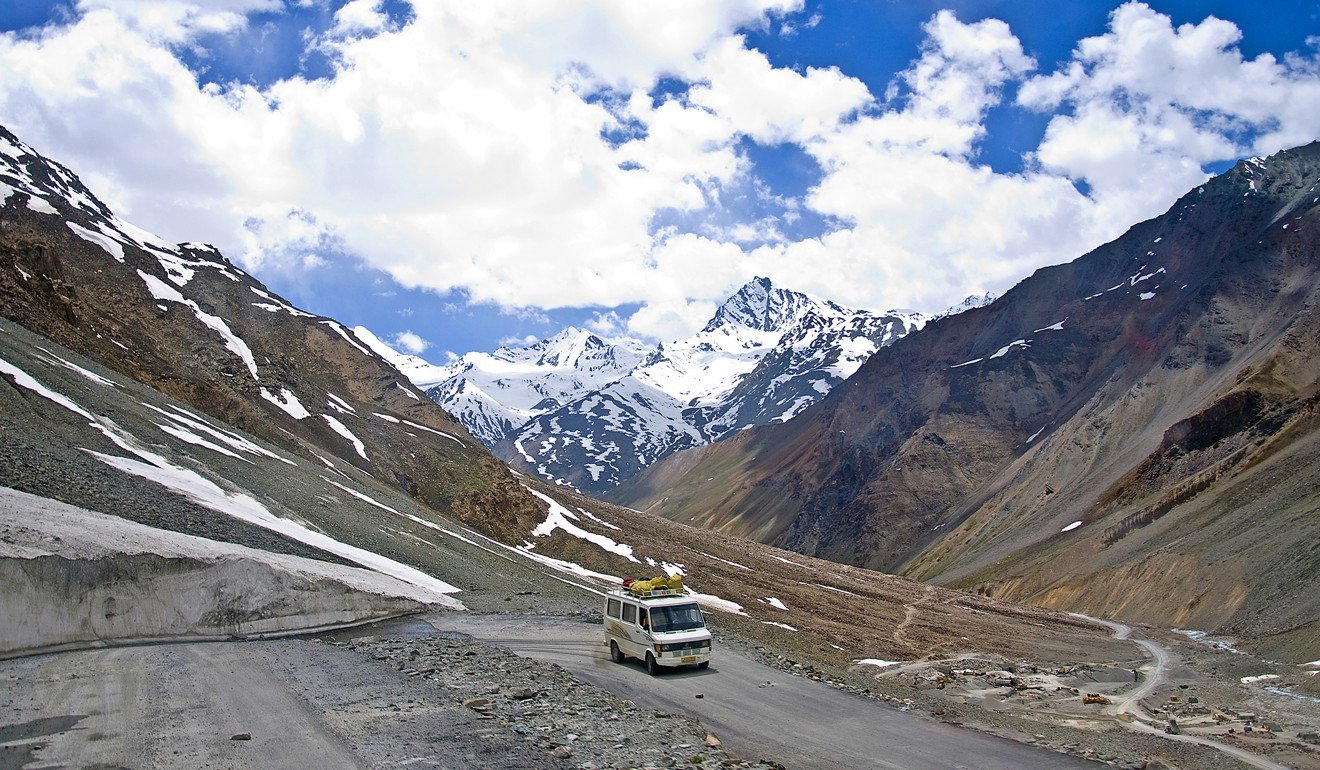
To reach Ladakh overland involves a journey along one of the world’s highest altitude roads. Photo: Tim Pile
Shaven-headed monks emerge from brilliant-white monasteries and squint in the piercing sunlight. Talking of which, Ladakh will soon be home to the world’s largest single-location solar photovoltaic plant.
It could certainly do with the extra energy – tourism is booming and has brought tangible economic benefits. In all, 327,366 people visited the city of Leh in 2018, a whopping 50,000 increase on the previous year.
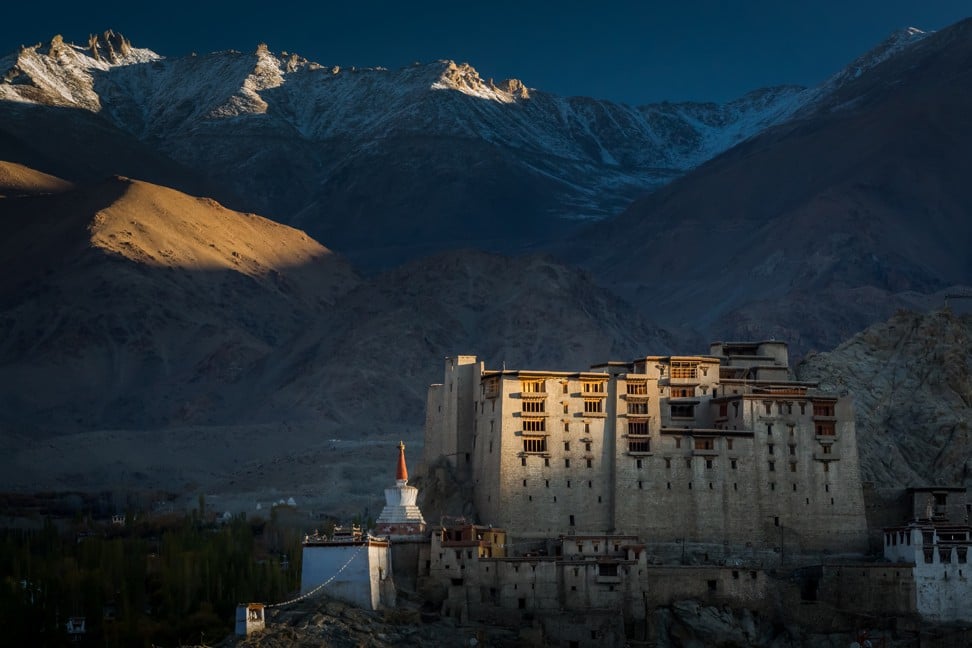
The former royal palace in Leh.
Many arrive in the state capital after completing one of the world’s great road trips. The 475km journey from Manali, in neighboring Himachal Pradesh, takes travelers between razor-sharp peaks and over high passes, including the 5,359-metre Khardung La, along one of the highest paved roads in the world.
The drive will become easier next year with the completion of the Rohtang Tunnel, a trans-Himalayan short cut that will reduce travel times and ensure year-round connectivity to Ladakh. A long-awaited railway line from Bilaspur to Manali and Leh will further open up the pristine region by 2022.
In another boost to the tourism sector, Prime Minister Narendra Modi inaugurated five new trekking routes during a visit to Leh in February.
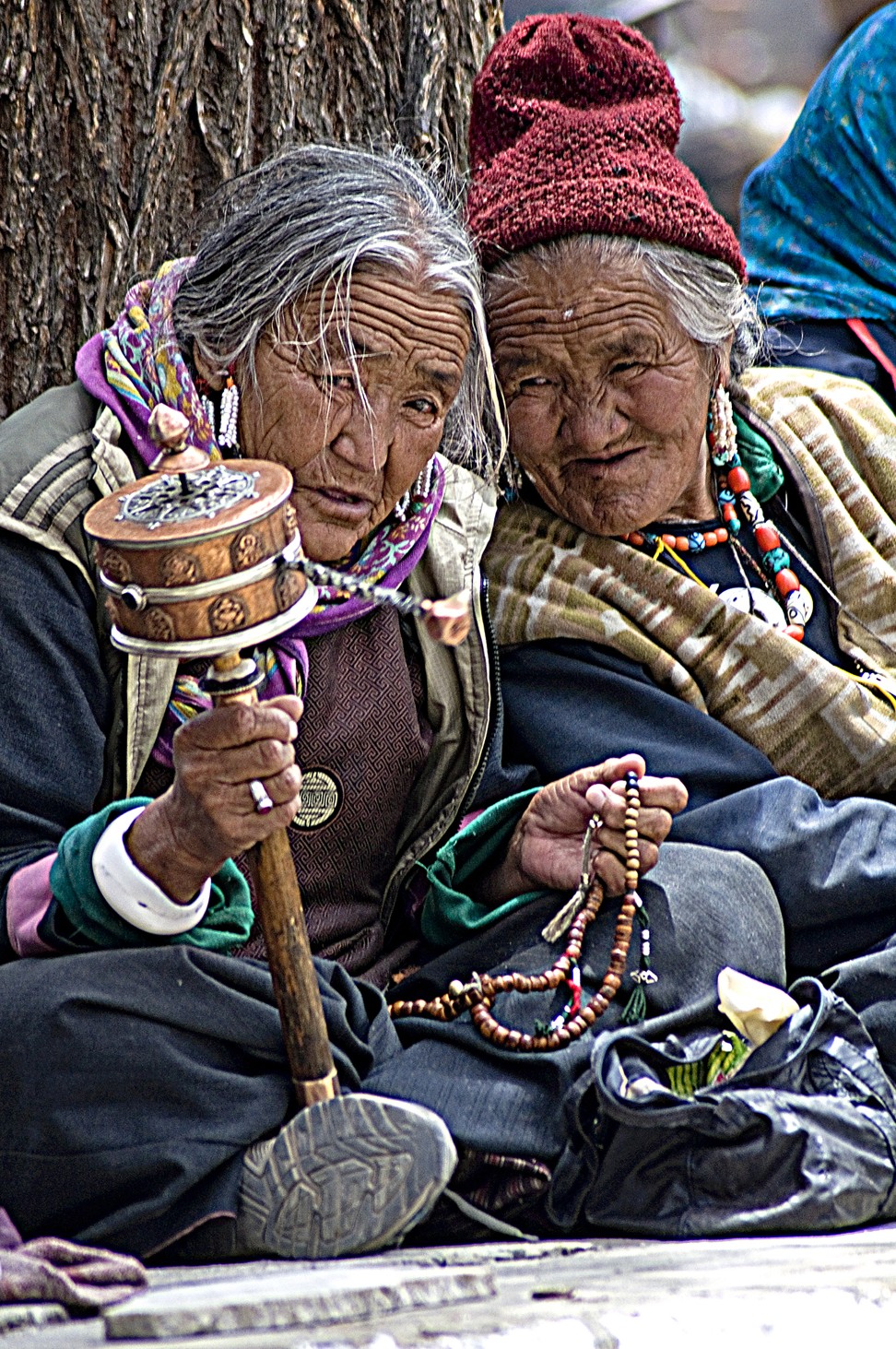
Two locals, one with a Buddhist prayer wheel. Photo: Tim Pile
Before heading onto the mountain trails, get a feel for Leh by visiting the former royal palace. The 17th-century structure was modeled on the Potala Palace, in Tibet, and offers panoramic views of the dusty, medieval-looking settlement.
Besides its temples, markets, and monasteries, Leh is a city to observe and absorb. Pick a cafe, order a cup of yak-butter tea, relax and let the sights, smells, noise and color wash over you. Ladakh’s position at the crossroads of ancient trade routes can be seen in the weathered faces of its inhabitants. Kashmiri merchants rub shoulders with shepherds and Tibetan monks haggle with Punjabi businessmen.
The best-known of Ladakh’s attractions is a six-hour drive from Leh. Pangong Tso is the highest salt lake in India. The beauty spot draws movie buffs and Instagrammers keen to see where the final scene of 2009 Bollywood blockbuster 3 Idiots was filmed.
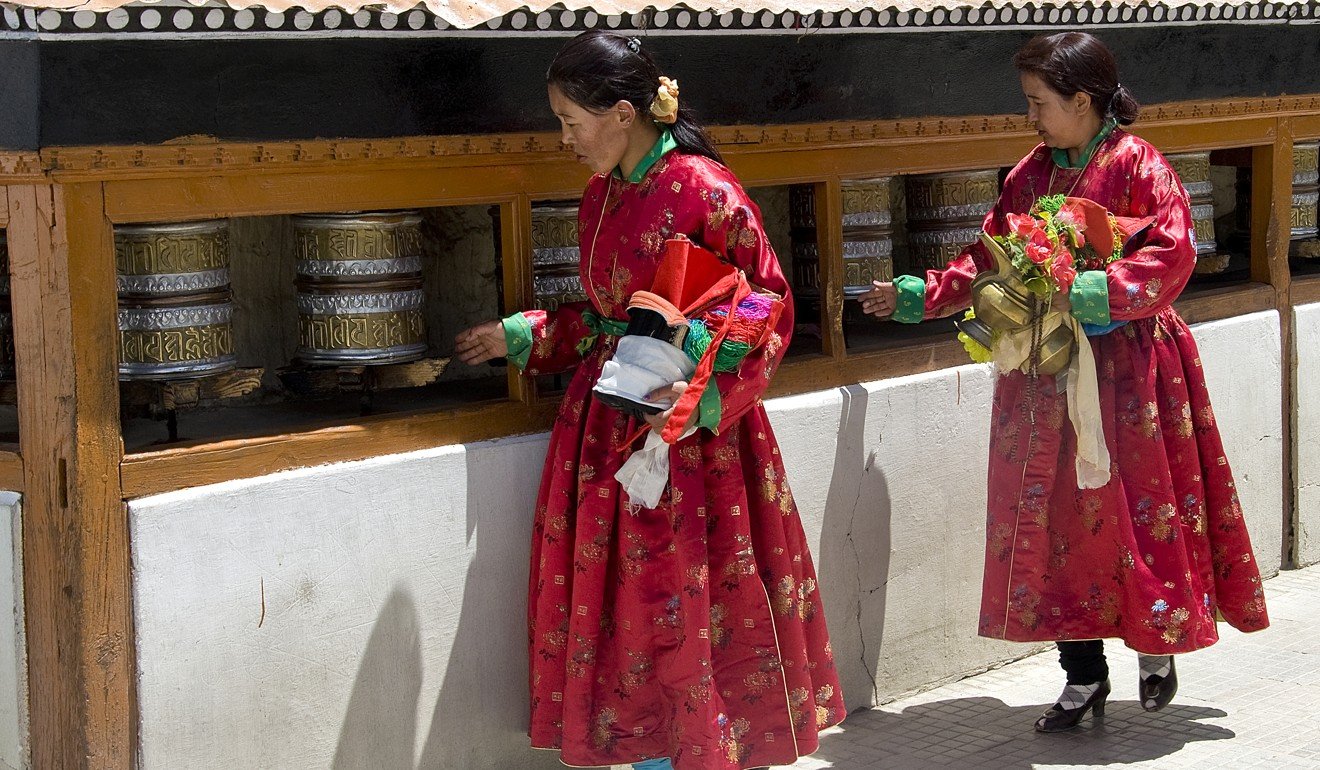
Leh is a city of temples, and culturally close to Tibet in China. Photo: Tim Pile
Next stop should be the spectacular Nubra Valley. Herders populate the high desert in summer, their yaks grazing near the snowline while tourists sign up for Bactrian camel safaris on the sand dunes of Hunder village, once a Silk Road staging post.
The bad
The farming of barley, wheat, and vegetables happen in a hurry hereabouts. No sooner are crops sown in the thin Ladakhi soil than winter starts drawing in and the ground becomes frozen solid for months on end. It’s enough to make villagers throw in the towel and head for the bright lights of Leh. That’s where fortunes are made, after all.
Except they’re not. Well, not for most Ladakhis anyway. The aforementioned tangible economic benefits accrue only to a small group of tour operators, hotel owners, and merchants, many of whom are from elsewhere in India and come to Leh solely for the tourist season.
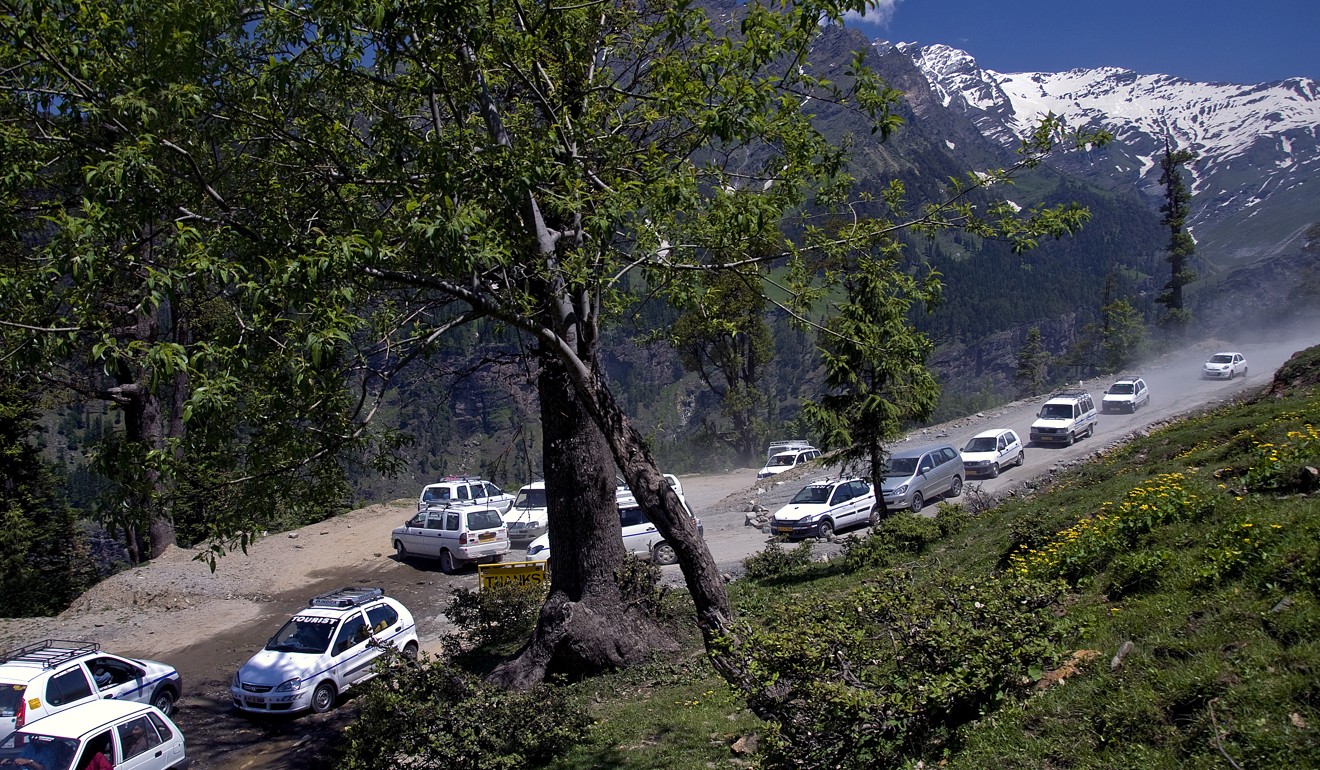
A traffic jam at Khardung La. Photo: Tim Pile
Subsistence farmers, who make up most of the population, have seen little improvement in their living conditions but are left to deal with the negative social, environmental and psychological impact of Ladakh’s change from an economy based on self-reliance to one driven by external market forces.
Writer and filmmaker Helena Norberg-Hodge feels the West has much to learn from the traditional Ladakhi way of life in terms of sustainability, diet, family values, and overall happiness. But instead, waves of wealthy outsiders descend on the pre-industrial region and leave locals, particularly the younger generation, feeling self-conscious, backward and poor.
Tourism industry wages aren’t anywhere near enough for them to emulate the high consumption habits of rich visitors, so illegal means are adopted. Theft, once unheard of in Ladakh, has become a problem, as have children pestering people for money.
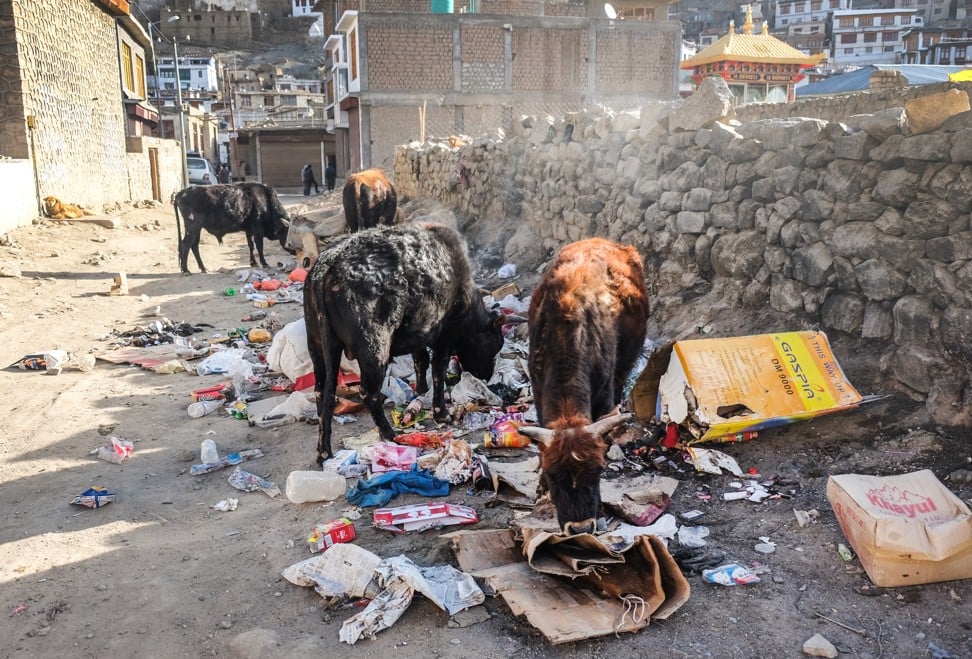
Feral cattle graze on rubbish left on the street. Photo: Shutterstock
An estimated 30,000 plastic water bottles are dumped in Leh every day. Like nearly everything else, they were trucked in across the Himalayas from thousands of kilometers away. Then there’s the diesel emitted from cars idling in traffic jams at Khardung La and other high-altitude bottlenecks.
The new Rohtang Tunnel will enable ever more sightseers to reach Ladakh but does little to suggest an enlightened model of sustainable travel is on the cards.
In recent years there has been a surge in the number of domestic tourists drawn up from the baking Indian plains by the snow-capped scenery that appears in television advertisements and Bollywood blockbusters. In fact, 3 Idiots may end up being responsible for more damage to Ladakh’s environment than almost anything else.
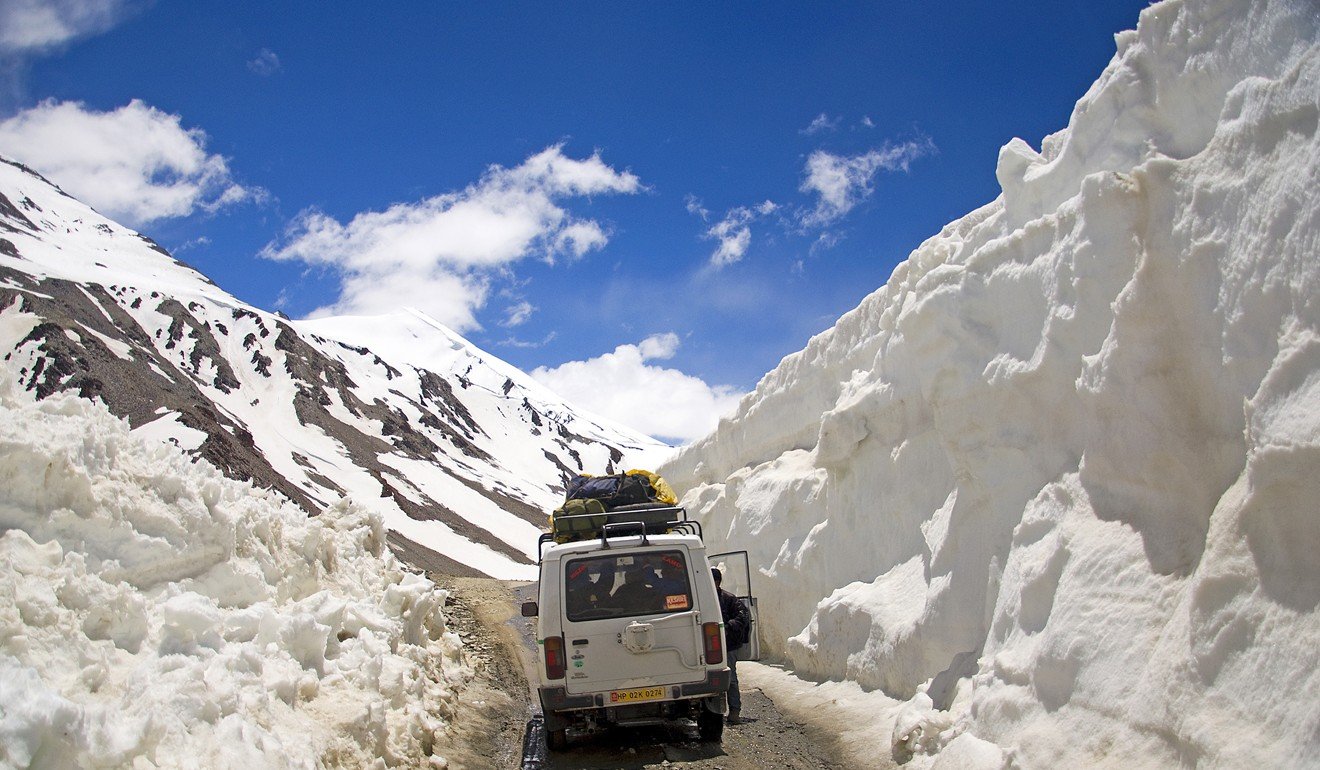
A van negotiates a road fringed by deep snow. Diminishing snowfall is evidence of the impact of climate change in Ladakh. Photo: Tim Pile
Almost. The effects of global climate breakdown are increasingly evident in the ecologically fragile Himalayas – just ask the locals. Ladakhis say they have never witnessed such erratic climatic conditions. Flash floods caused by short but heavy downpours are worrying enough, but a pattern of diminishing snowfall and resulting drought has more serious long-term implications.
The glacier on which Leh depends is predicted to melt completely within five or six years and hoteliers are already drilling boreholes in search of elusive groundwater.
The shortage isn’t helped by the rush to modernize. Replacing traditional dry toilets with Western flush systems places greater demands on scarce water resources, for example. As engineer and educator Sonam Wangchuk puts it: “If people from the big cities live simply, then people in the mountains could simply live.”
The ugly
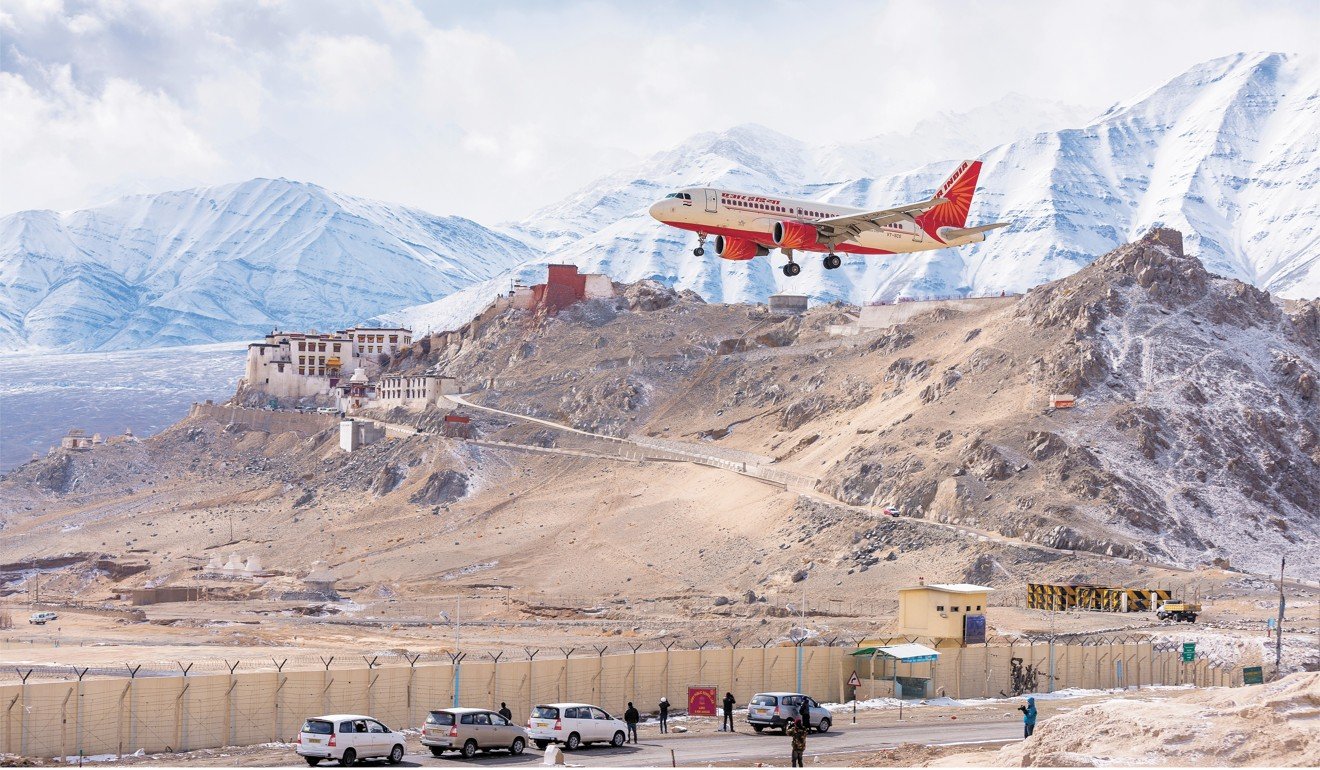
An Air India plane approaches Leh airport. Photo: Shutterstock
Fly, rather than take the bus, to Leh (3,500 meters above sea level), and the thumping headaches, dehydration and general lethargy that accompany altitude sickness will begin as soon as you reach the baggage carousel. You’ll need to rest for a day or two while the symptoms subside.
The cafes are OK but I’d steer clear of the yak-butter tea. Unless it’s for a bet.


